
Digital Scarcity and Cultural Value: NFTs in the Contemporary Art Market
Written by Mackenzie Harron, University of Toronto
Edited by Anne-Lise Mocanu
The emergence of Non-Fungible Tokens (NFTs) has reshaped how art, value, and materiality are conceptualized within the contemporary art market. Built on blockchain technology, NFTs allow for the creation and trade of unique digital artworks whose ownership is recorded on decentralized ledgers. As Zoran Poposki argues, NFTs represent a convergence of technological and artistic systems, enabling forms of digital authentication and traceable provenance that differ markedly from traditional modes of art verification and circulation.[1] Rather than relying on physical properties or institutional gatekeeping, NFT provenance depends on cryptographic inscription—a shift that destabilizes established assumptions about what constitutes an artwork, an edition, and ownership.
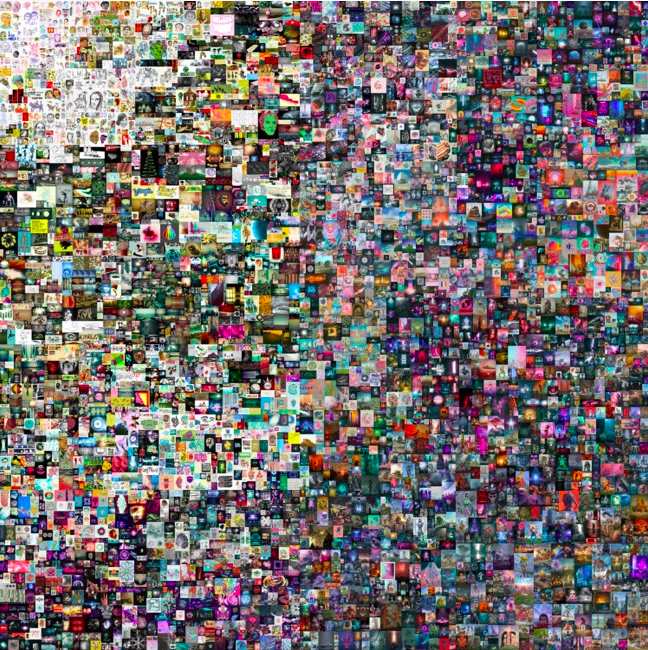
Figure 1. Beeple, Everydays: The First 5000 Days, 2021. Courtesy of Christie’s Images Limited.
Beyond their technological structure, NFTs have generated new market ecosystems in which collectors, artists, traders, and platforms intersect, mirroring certain dynamics from the traditional art market while introducing challenges and opportunities unique to digital culture.[2] These dynamics are not confined to a single landmark but emerge across a range of NFT practices, from early crypto-art projects to generative systems and large-scale participatory experiments.
Rather than locating the emergence of NFT value in a single landmark sale, it is more analytically productive to understand NFT markets as developing through a web of artistic practices that articulate different mechanisms of scarcity, authorship, and circulation. While Beeple’s Everydays: The First 5000 Days has been frequently positioned as a defining moment in the legitimization of NFTs within the traditional art market, its significance lies less in its singularity than in its visibility (Figure 1). The work crystallized dynamics already present within earlier blockchain-based art communities and translated them into an institutional context. As such, it functions not as a point of origin but as a moment of convergence between crypto-native practices and established systems of cultural validation.
Prior to this institutional recognition, projects such as CryptoPunks by Larva Labs, had already established a model of value grounded in algorithmic generation, fixed supply, and networked participation (Figure 2).[3] As one of the earliest and most influential NFT collections, CryptoPunks derived significance not from aesthetic innovation or curatorial endorsement, but from their embeddedness within an emergent digital community. Released in 2017, the project consisted of ten thousand unique pixel portraits inspired by the London 80s punk scene and 90s cyberpunk culture.

Figure 2. CryptoPunks, six examples from the 10,000 randomly generated works, 2017. Courtesy of CryptoPunks.
Initially distributed for free, the avatars were intended for users to “adopt a pre-existing avatar that signals how [they] want to be seen online.”[4] Their rise coincided with the rapid expansion of NFT markets as a new asset class—characterized by high transparency, continuous trading, and speculative investment behaviour—with early 2021 market analyses noting billions in total sales and hundreds of thousands of active users.[5] Unlike later high-profile NFT sales, CryptoPunks developed value without institutional mediation, emerging from sustained community engagement. This bottom-up formation of value exemplifies Pierre Bourdieu’s theory of the field of cultural production: worth is relational rather than intrinsic, and ownership functions as a performative marker of identity, technological literacy, and cultural belonging.[6]
This relational framework complicates traditional distinctions between artwork and market, particularly when considered alongside the ontological instability of digital images. As Elisa Caldarola notes in her analysis of Beeple’s early work darn you, baby walrus!!111111 (2008), digital images circulate freely, without material restriction, and lack a stable sense of originality (Figure 3).[7] Any encounter with a digital image can function as an authentic experience of the work, undermining conventional notions of scarcity. Despite this, the sale of Everydays for over $69 million represents not the commodification of a discrete visual object, but the exchange of a tokenized claim. As Caldarola argues, the only genuinely scarce object in such transactions is the NFT itself, “a unique set of digital data,” whose scarcity is produced not by the image but by the blockchain inscription that designates a particular instance as singular.[8] By acquiring such a piece, the buyer does not obtain copyright or control reproduction; instead, the value of the purchase is anchored in this cryptographic designation. This demonstrates that scarcity in NFT markets is not inherent to the image but enacted through technological and discursive processes.
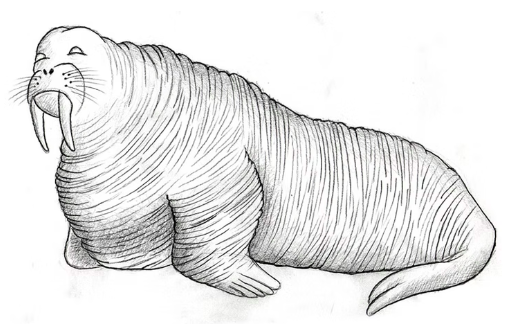
Figure 3. Beeple, darn you, baby walrus!!111111, February 8, 2008. Courtesy of Beeple Everyday Archives.
Subsequent projects extend and complicate these dynamics by foregrounding different dimensions of digital materiality. Generative works like Fidenza #58, produced by Tyler Hobbs 2021 algorithm, relocate artistic value from the image to the system that produces it, positioning the algorithm itself as the primary site of authorship (Figure 4).[9] Rather than being individually composed by hand, each output is produced through a set of programmed rules, shifting attention toward the automated processes underlying the work. In this sense, the work reflects Yuk Hui’s argument that digital objects only come into existence when code is executed within specific technical environments.[10]

Figure 4. Fidenza by Tyler Hobbs, Fidenza #58, June 11, 2021. Courtesy of Art Blocks.
At the same time, projects like Right-click and Save as Guy (2018) by the NFT artist XCOPY foreground the contradictions inherent in NFT culture, explicitly staging the tension between infinite reproducibility and enforced scarcity (Figure 5). The work directly references the common criticism that digital images can simply be “right-clicked” and copied despite their sale as a unique blockchain asset.[11] XCOPY’s inclusion in institutional platforms such as Sotheby’s NFT marketplace further demonstrates how these critical works are not external to the market, but increasingly embedded within its structures.[12] By embedding critique within the NFT format itself, such works demonstrate how value is generated through circulation, aligning with Hito Steyerl’s account of visibility as a driver of cultural significance.[13]
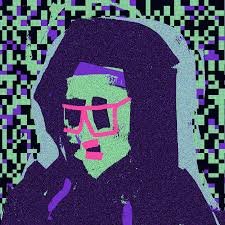
Figure 5. XCOPY, Right-click and Save as Guy, 2018. Courtesy of Glitch Marfa.
These dynamics are reconfigured in Pak’s The Merge (2021), which departs from the model of singular ownership altogether (Figure 6). Rather than presenting a fixed object, the work was distributed across thousands of collectors who purchased “mass units,” each representing a fractional share in the same artwork rather than a distinct segment of it. The work itself remained intact, while ownership was collectively distributed.[14] In this case, value emerged not from exclusivity but from aggregation and participation. The artwork exists as a networked formation, shaped by its holders and the structure of distribution. In this sense, The Merge redefines the ontology of the artwork itself within NFT-based practices, positioning it as an emergent property of collective participation rather than a fixed object.
Figure 6. Pak, The Merge, 2021. Courtesy of Nifty Gateway.
Taken together, these examples—Everydays, CryptoPunks, Fidenza, Right-click and Save as Guy, and The Merge—demonstrate distinct but overlapping mechanisms through which NFT value is constructed: community formation, institutional validation, algorithmic authorship, critical reflexivity, and distributed participation. Rather than converging on a single model, NFTs reveal a plurality of value systems that operate simultaneously within digital art markets.
In the wake of the 2021 NFT boom, the market contracted sharply and underwent a period of reassessment. The Art Basel & UBS Survey of Global Collecting 2025 reports that digital art holdings in private collections peaked at 15% in 2022, dropped to 3% in 2024, and rebounded to 13% in 2025.[15] These fluctuations reflect both instability and resilience, demonstrating that NFTs remain a meaningful, if volatile, segment of contemporary art collecting. The decline exposed how much the early valuations were driven by speculation, while the rebound suggests a more selective market and a growing interest in generative and computational forms of art. NFTs are thus brought into broader digital art discourses rather than functioning solely as speculative assets.
These developments foreground broader ontological questions about digital art and the mechanisms through which it acquires cultural and economic significance. Drawing on New Materialist theory—which “emphasizes the existence of objects independent of human thought and acknowledges the importance of recognising their reality to understand the world”—Karen Barad’s concept of the “agential cut” provides a framework for understanding how NFTs produce scarcity and value.[16] For Barad, material distinctions are not inherent but enacted through “intra-actions” between human and non-human agents.[17] From this perspective, minting an NFT functions as an agential cut: a material-semiotic event that produces a distinction between a tokenized instance of a digital file and all other potential versions. Scarcity, then, is not a property of the image itself, but a consequence of the process that designates a specific token as unique.
Building on Tom Gruber’s notion of ontologies as designed artifacts, Yuk Hui’s theory of digital objects further clarifies the ontology of NFTs by emphasizing their dependence on technical infrastructures.[18] A digital object exists only within systems capable of maintaining its references and executing its code. NFTs exemplify this condition: their materiality is inseparable from blockchain protocols, platform interfaces, hardware systems, and social practices of verification. If these infrastructures fail, the NFT’s identity becomes unstable, making digital authenticity dependent on technological continuity rather than material persistence.[19]
Hito Steyerl’s critique of digital circulation adds another dimension to this analysis. Digital images accrue value not through stable material integrity but through visibility and dissemination. The “poor image” gains cultural currency through circulation rather than scarcity.[20] NFTs attempt to impose hierarchy within circulation by differentiating a tokenized “original,” yet they remain dependent on the same dynamics of virality and networked attention. As NFT images circulate across platforms, they accumulate symbolic capital, which in turn reinforces their market value.[21]
Collector behaviour reflects these dynamics. Owners actively promote their holdings through social media, display NFT images as profile images, and maintain visible blockchain identities.[22] Ownership becomes performative, a public expression of cultural affiliation, technological literacy, and financial participation. Market fluctuations further reinforce this behaviour: the decline between 2022 and 2024 revealed skepticism driven by market correction, while the rebound in 2025 suggests a shift toward more selective and critically informed engagement with digital art.[23] Volatility remains a defining feature of NFT markets, but it now intersects with emerging aesthetic frameworks and more deliberate forms of collector evaluation.
The tension between freely circulating digital media and blockchain-secured ownership raises deeper questions about authenticity in digital art. Traditional art markets rely on connoisseurship, physical inspection, and archival documentation; NFTs replace these mechanisms with cryptographic verification. Authenticity becomes algorithmic, determined by consensus protocols rather than expert judgment. Yet this does not eliminate uncertainty; it merely relocates it. Smart-contract vulnerabilities, metadata fragility, and platform dependency introduce new forms of risk, making NFT authenticity both more rigid and more precarious than its physical counterparts.[24]
Therefore, NFTs exemplify how value in digital art markets emerges through the interplay of technological infrastructures, market behaviours, and cultural narratives. They reveal how scarcity can be enacted rather than inherent, how authenticity can be algorithmic rather than material, and how ownership can be performative and publicly visible. NFTs amplify existing tensions within the art world—between exclusivity and democratization, circulation and control, materiality and immateriality—while opening new frameworks for understanding cultural production in a digital age.
This analysis has exposed how NFTs have fundamentally transformed how value, authenticity, and ownership are constructed in contemporary art markets. Their digital materiality, circulation dynamics, and socio-technical infrastructures challenge long-standing assumptions rooted in physical scarcity and institutional authority. Through a digital materialist and socio-technical framework, one that synthesizes scholarship on ontology, circulation, and cultural value, it becomes clear that NFTs are not merely technological artifacts or speculative instruments but cultural objects that reveal shifting relationships between art, technology, and value. As digital culture continues to evolve, NFT scholarship offers crucial insight into the changing conditions under which art is produced, exchanged, and understood. Thus, more than a financial innovation, NFTs reshape the conceptual foundations of the art market itself.
Endnotes
[1] Zoran Poposki, “Crypto-Aesthetics: Towards a New Materialist Theory of NFT Art,” Journal of Visual Art Practice (September 2024): 1–2, https://doi.org/10.1080/14702029.2024.2393554.
[2] Michele Nadini, Luca Alessandretti, Federico Di Giacinto, et al., “Mapping the NFT Revolution: Market Trends, Trade Networks, and Visual Features,” Scientific Reports 11, no. 20902 (2021): 5, https://doi.org/10.1038/s41598-021-00053-8.
[3] Hong Bao and David Roubaud, “Discoveries from the NFT Market,” in Non-Fungible Tokens (London: Routledge, 2024), 47.
[4] CryptoPunks, “CryptoPunks,” accessed May 4, 2026, https://www.cryptopunks.app/.
[5] Luisa Schaar and Stylianos Kampakis, “Non-Fungible Tokens as an Alternative Investment: Evidence from CryptoPunks,” The Journal of the British Blockchain Association 5, no. 1 (2022): 1–2.
[6] Pierre Bourdieu, The Rules of Art: Genesis and Structure of the Literary Field (Stanford, CA: Stanford University Press, 2022), 83, https://doi.org/10.1515/9781503615861.
[7] Elisa Caldarola, “Conceptualist Strategies in Pandemic Time: The Case of Beeple’s NFT,” in Social and Technological Aspects of Art: Challenges of the ‘New Normal’, ed. Iris Vidmar Jovanović and Valentina Marianna Stupnik (Rijeka: Faculty of Humanities and Social Sciences, University of Rijeka, 2022), 186–87.
[8] Elisa Caldarola, “Conceptualist Strategies in Pandemic Time: The Case of Beeple’s NFT,” 187–88.
[9] Alfred D. Steiner, “Fidenza Fugazi?: NFTs and Trademark Prosecution,” SSRN Electronic Journal (2024): 6, https://doi.org/10.2139/ssrn.4825660.
[10] Yuk Hui, On the Existence of Digital Objects (Minneapolis: University of Minnesota Press, 2016), 82.
[11] Malte Rauch, “Saints of Scarcity: XCOPY’s ‘Right-Click and Save as Guy,’” edited by Madison Page and Derek Edwards, Glitch Marfa, May 2023, https://www.glitchmarfa.com/e30dgallery/right-click-and-save-as-guy/.
[12] Richard Whiddington, “Sotheby’s Launches a Secondary NFT Marketplace,” Artnet News, May 3, 2023, https://news.artnet.com/market/sothebys-secondary-marketplace-2294615.
[13] Hito Steyerl, “In Defense of the Poor Image,” e-flux Journal, no. 10 (2009): 7, https://www.e-flux.com/journal/10/61362/in-defense-of-the-poor-image.
[14] Amah‑Rose Abrams, “Artist Pak Just Sold 266,445 Shares of an NFT for $91.8 Million on Nifty Gateway,” Artnet News, December 7, 2021, accessed December 5, 2025, https://news.artnet.com/market/pak-nft-91-8-million-2044727.
[15] Art Basel and UBS, The Art Market 2025: Global Market Report (2025), 60, https://theartmarket.artbasel.com/the-art-market-2025/global-market.
[16] Zoran Poposki, “Crypto-Aesthetics,” 5.
[17] Ibid., 7-9.
[18] Yuk Hui, On the Existence of Digital Objects, 82.
[19] Zoran Poposki, “Crypto-Aesthetics,” 12.
[20] Hito Steyerl, “In Defense of the Poor Image,” 7.
[21] Heidi Cooke, “Making Art, Making Value Online: NFTs, Blockchains and Online Art Economies,” Journal of the Anthropological Society of Oxford 16 (2024): 27.
[22] Heidi Cooke, “Making Art, Making Value Online,” 43.
[23] Art Basel and UBS, The Art Market 2025: Global Market Report, 60.
[24] Michele Nadini et al., “Mapping the NFT Revolution”, 1–2.