
Sicily and ‘il sonno della ragione’: towards a Sciascian theory of art
By Marco Amatangelo, University of Toronto
Edited by Diana Yamada and Mathieu Laj
The artistic patrimony of the island of Sicily (and Southern Italy more generally) has long been mischaracterized by art historians. Greatly overshadowed by the artistic cultures occurring elsewhere in Italy, the art of the meridione has been (and to a lesser extent, still is) characterized as something not only different from central Italy but inferior to it.[1] Of the Calabrese painter Marco Cardisco, Giorgio Vasari states: “E nel vero di continuo certi ingegni in certe Provincie sono a certe cose atti, ch'altri non possono essere; Né per fatiche, che eglino durino, arrivano però mai al segno di grandissima eccellenza.”[2] This is why, in the following sentence, Vasari expresses his surprise that such a “province” could produce a painter of any eminence: “Ma se quando noi vediamo in qualche Provincia nascere un frutto, che usato non sia a nascerci, ce ne meravigliamo; tanto più d'un ingegno buono, possiamo rallegrarci, quando lo troviamo in un paese, dove non nascono uomini di simile professione; Come fù Marco Calavrese pittore.”[3]
Apart from adhering to the overstated narrative that the meridione is a geography bereft of artistic or intellectual pursuit, Vasari also presents this artist in complete counterpoint to the geography of his birth, describing him as an anomaly. This mutual exclusivity of artistic prowess and meridionalità is echoed in the writings of Roberto Longhi. Discussing the formation of Sicily’s Antonello da Messina, Longhi states more explicitly:
Se si volesse poi riferire lo sviluppo di Antonello all’ambiente artistico napoletano o siciliano, si cadrebbe in un errore [. . .] poiché se una tradizione comunque artistica qual’era la lineare, poteva dotare l’artista di una comprensione generale dei problemi pittorici, la tradizione artistica meridionale non poteva dotare Antonello di nulla fuorché di una raffinata manovalità, poiché essa era per il resto affatto sprovvista di ogni idea anche elementare di stile.[4]
The art of Antonello, thus, is seen as something spontaneous, arising unprecedentedly from an island otherwise barren of the intellectual ‘linear tradition.’ In other words, Antonello is understood by Longhi to be completely disconnected from Sicily, able to slough off the conditions associated with his birthplace and become a figure of eminence, an achievement that can only come out of a complete negation of the island of his formation.
The Sicilian author and intellectual Leonardo Sciascia was himself no stranger to Antonello’s legacy, nor Longhi’s interpretation of it. In a short newspaper entry written in regards to a 1981 exhibit of Antonello’s works at the Museo regionale di Messina, Sciascia responds to Longhi’s characterization of Antonello as a ‘Masaccio of Sicily,’ stating that “non persuade molto che la pittura di Antonello esploda come in un deserto.”[5] Writing for a 1967 edition of Rizzoli’s Classici dell’arte that surveys the life and work of the same Antonello, Sciascia more elaborately discusses the issue that arises in consideration of the artist as excised from his geography:
Un critico letterario dei giorni nostri ha dichiarato che non riesce a capire come si possa legare a un luogo una vita, e l’opera di tutta una vita; per parte nostra non riusciamo a capire come si possa far critica senza aver capito questo inalienabile e inesauribile rapporto, in tutte le sue infinite possibilità di moltiplicarsi e rifrangersi, di assottigliarsi, di mimetizzarsi, di essere rimosso e nascosto. Nessuno è mai riuscito a rompere del tutto questo rapporto, a stradicarsi completamente da questa condizione; e i siciliani meno degli altri.[6]
Despite being known primarily as a political writer of crime novels, Leonardo Sciascia has also generated a considerable and variegated output of writing and criticism on the topic of the visual arts, preeminently those of Sicily. Such essays span topics from the island’s Arab-Norman architecture to that of the Baroque cities of the Val di Noto, paintings and sculptures from the likes of Antonello and Laurana to those of his friends and contemporaries, from philosophical musings on eighteenthth-century statues to lobbying for governmental support for the conservation of Sicily’s artistic patrimony, the breadth of the writer’s artistic interest is quite apparent.[7] Giuseppe Cipolla refers to the holistic variety of Sciascia’s art writings as encompassing a certain “caleidoscopio critico” (“caleidoscope of criticism”). According to Cipolla, Sciascia understands the visual arts as kindred to literature, in that it serves as an instrument through which the truths of the human condition can be transmitted. As such, Sciascia’s essays seek to transcend the visual properties of an artwork, instead seeking more profound understanding. He plays not the role of connoisseur, but that of a reader. Both visual art and literature, according to the author, have an ability to reify human realities into an apprehendable medium. More succinctly expressed, art employs a “logica visibile al servizio dell’invisibile.”[8] However, what exactly comprises that ‘visual logic’ is an elusive concept, and the language of art in the mind (or, at the very least, in the writings) of the Sicilian author remains undefined.
Just as Sciascia interprets an inherent sicilianità within Antonello’s work, the author’s visual theory is inextricably tied to his geographical milieu. Sciascia insists that cultural actors in Sicily exhibit a unique way of being—an insular modo di essere—which ultimately informs their literary and artistic production.[9] Thus, a holistic ‘Sciascian’ theory of art must be understood as contingent upon and intrinsically tied to the modo di essere Sciascia identifies for the Sicilian people: the principles of this sicilitudine are what thread artists across time periods, linking artist, artwork, and viewer within a network of collective identity. Through my analysis of Sciascia’s criticisms on the topic of visual arts, I will thread the pieces of Sciascia’s writings into a more succinct visual theory rooted in regional identity.
I. L’ordine delle somiglianze
Returning to the aforementioned essay on Antonello entitled “L’ordine delle somiglianze” (the Order of Appearances), Sciascia links the artist’s works directly to a method of understanding the world that he identifies as uniquely and endemically Sicilian. According to the author, in Sicily “La misura di un’uomo è regolata su un ordine bioetnico delle somiglianze [. . .] Senza somiglianza non c’è ordine, conoscenza, giudizio.”[10] The state of the soul is not measured necessarily by one’s actions, but by one’s outward appearance. This visual-rational order is employed narratively within the novel Todo Modo, in which Sciascia employs a visual ekphrasis of art in order to establish a system of similarities and give access to true knowledge: the narrator of Todo Modo encounters a painting that depicts the devil wearing the same pince-nez glasses as the character Don Gaetano. The visual echo between the two figures implicitly reveals to the narrator (and thus, the reader) the affinity between Gaetano and the personification of temptation, succinctly underlining the priest’s character despite the deliberate obscurity of his words.[11]
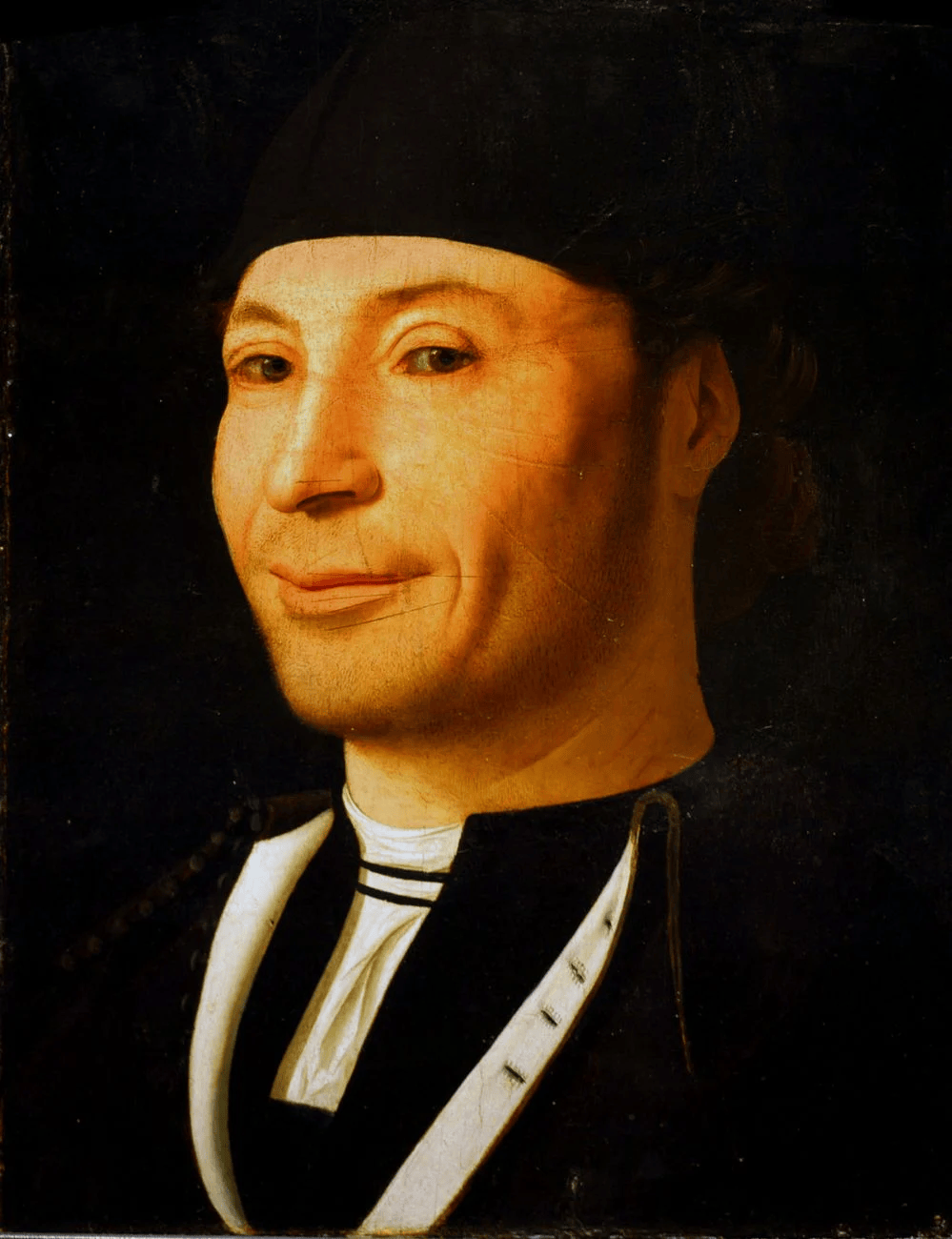
Figure 1. Antonello da Messina, Ritratto d'ignoto marinaio, 1465-1467, oil on panel, Museo
While this conceit holds value in the setting of Sciascia’s narratives, the objectivity of appearances goes beyond this superficial reading, instead forming the basis of a more conceptual framework. In L’ordine delle somiglianze, after searching for a characterization of the sitter in Antonello’s portrait of l’ignoto marinaio (Fig. 1), Sciascia concludes that it is impossible to ascribe any ‘particular humanity’ to the smiling figure. The figure has no stable resemblance, no single model, but still ‘resembles’ in any case, regardless of whom. What emerges from this exercise is that the ‘order of appearances’ functions as a more-than-literal reading of visual similarity, beyond the subjectivities of the beholder. On the contrary, Sciascia describes the act of reasoning through and with resemblances as being invariably objective. Rather than endorsing the inherent truth of physiognomic affinities, Sciascia describes more of a logical apparatus for experiencingthe world and one’s place within it. Appearances are for the mind what the ‘accident’ of light is for the eye: they function simply as a medium through which one can reason, neither carrying nor conveying any objective meaning in and of themselves. In fact, the medium of appearances is the only objective thing. Even the objectivity of death is “un’oggettività figurata: di figure, di apparenze”[12] augmented not by the existential anguish of cessation, but by an anxiety around the immediate appearance of the deceased after their death, and how that appearance persists in posterity. The logic of Sciascia’s Sicilian is informed by what is visible, as opposed to what can be derived through inductive reasoning.
II. The visual consequences of Sicilitudine
Further understanding this visual logic of appearances requires an exploration of Sciascia’s characterization of the Sicilian modo di essere. In an interview with Marcelle Padovani, Sciascia elaborates on the idea of sicilitudine, describing it not just as a way of life, but as a psychological reality rooted in the asymmetrical tension between the anima romana—the rational, logical Roman soul—and the anima araba, which is marked by a certain fantasy, or surreality.[13] Notable to this end is Sciascia’s self-exoticization and self-orientalization of the Sicilian psychological identity. In a short essay entitled “Sicilia antica: sulle tracce degli arabi,” the author explores the question of the Arab heritage, positing that it forms a covert yet essential part of the collective identity of modern Sicily:
Dov’è la Sicilia Araba? In quello che gli arabi assoggettati hanno fatto sotto i normanni? No, non è sufficiente. Forse è nella fantasia, nel sangue: oscuramente. E nella campagna, nell’ambiente umano, nei nomi. [. . .] Ganivet diceva a Unamuno: ‘Togliete gli arabi dalla storia di Spagna, e di me non restano che le gambe.’ E la stessa cosa potrebbero dire molti siciliani, anche se resterebbe tutto.[14]
The Arab lineage in Sicily is thus relegated to the realm of the psychological abstract. While ultimately adhering to contemporary orientalist ideas that place a fantastical, irrational ‘Other’ in discursive counterpoint to a rational Europe (represented here by the anima romana), Sciascia uses this lineage to ‘Other’ and exoticize the self, discursively placing the psychological and cultural reality of Sicily in opposition to that of the rest of Italy.
One such figure where La Sicilia araba manifests itself is in the folk character of Giufà, the siculo-arab ‘village idiot’ of the island’s oral tradition.[15] The character is often the perpetrator of outrageous behaviour that occasionally borders on the fantastical and surreal. The antics of Giufà come from a place of ignorance and isolated innocence, in stark contrast to the rage and frustration of the stories’ other characters. In a short story entitled Giufà, Sciascia leans into self-orientalization by employing the Arabic spelling (جحا) in the title. The story follows Giufà, as he mistakes the Cardinal for a red-crested bird, shoots him, and hides the body in a well. As the townspeople frantically search for the body, Giufà continues to infuriate the crowd through sacrilegious quips expressed in pure unawareness of cultural taboo, ultimately socially isolating him from the other figures in the story.[16]
Beyond mere fantasy, the isolation of Giufà prefigures and reveals an individual fatalism, an intrinsic solitude, that according to the author comes precisely from this anima araba and persists in the modern psychological reality of the Sicilian.[17] This solitude, in fact, is seen as a necessity:
In Sicilia, è profondamente radicata che, per essere completamente se stessi, bisogna esser soli, che la solitudine è il luogo di “ritrovamento” di sé; che gli altri ci spartiscono, ci sezionano, ci moltiplica che con gli altri non si riesce a essere creature, ma solo personaggi, e che per meritarsi di essere creature, bisogna svignarsela alla volta della solitudine, bisogna essere un uomo solo [. . .] Quando si è soli si è fatalmente d’accordo col mondo, e che non si pensa affatto a trasformarlo, a migliorarlo o a distruggerlo. Lo si accetta qual’è![18]
Only when in the tranquillity of solitude does one categorically embrace the objective state of the world.
In addition to an intrinsic solitude, Sciascia identifies the Sicilian psychological reality with a marked pessimism. As he describes in his interviews with Padovani, this is owed to the fact that Sicily had been systematically conquered and exploited by successive empires, and that each ephemeral government yielded no change in the oppressive power structure. What is left is a “speranza del cambiamento esterno, ma sempre non viene [. . .] Qui le riforme di solito non portano a niente.”[19] This paradoxical state of ever-changing and yet never-changing fortune produced an ingrained sense of pessimism that pervaded even into language: “Come volete non essere pessimista in un paese dove il verbo al futuro non esiste?”[20] This combination of solitude and political intransigence places the Sicilian in a world that is perpetually experienced in the present, forever actualized in its immediate state; a world whose beholder is placed in fatalistic accordance with its objective, immutable present.
Returning to the visual arts, the psychological of self-exoticized fantasy, intrinsic solitude, and pessimism prefigures a Sicilian penchant for worldly realism that begins with Antonello and persists to Sciascia’s contemporaries:
“Tale identità [siciliana] la si ritrova a livello dell'espressione artistica, e ha nome realismo, dato che la Sicilia si ridesta all’arte sempre a contatto di movimenti, di solito esterni, che possiamo chiamare “realistici”: Antonello da Messina a contatto del realismo dei fiamminghi. I siciliani hanno una particolare attenzione al reale la si ritrova persino in quella specie di scuola fotografica di Palermo dei nostri anni.”[21]
This perpetual entelechy of the world produces a uniquely Sicilian taste for art that depicts reality in its most objective form, that is, visually. Realism, however, can be psychological as much as figurative, and the semantic “Otherness” of fantasy can play a role to this end.
III. Villa Palagonia and il sonno della ragione
Villa Palagonia, an eighteenth-century palace in Bagheria, stands as an emblem of Sicilianità for Sciascia.[22] The Villa is famous for its menagerie of sculpted monsters that adorn the palace’s gates and gardens (e.g., Fig. 2). Some ascribe this sculptural fantasy to a certain “sonno della ragione” in juxtaposition to the contemporary cultural output of Europe’s Enlightenment.[23] To Sciascia, however, they are a manifestation of a distinctly Sicilian rationality. In a preface to a volume of photographs by the photographer Ferdinando Scianna which spotlight the Villa’s monsters, Sciascia pounds upon a certain discomfort that arises from them. According to the Marchese di Villabianca, an eighteenth-century visitor to Palagonia, the sculptural menagerie unnerved “even the most sane minds;” yet despite this disconcertment, or rather because of it, Villabianca is brought to laughter:
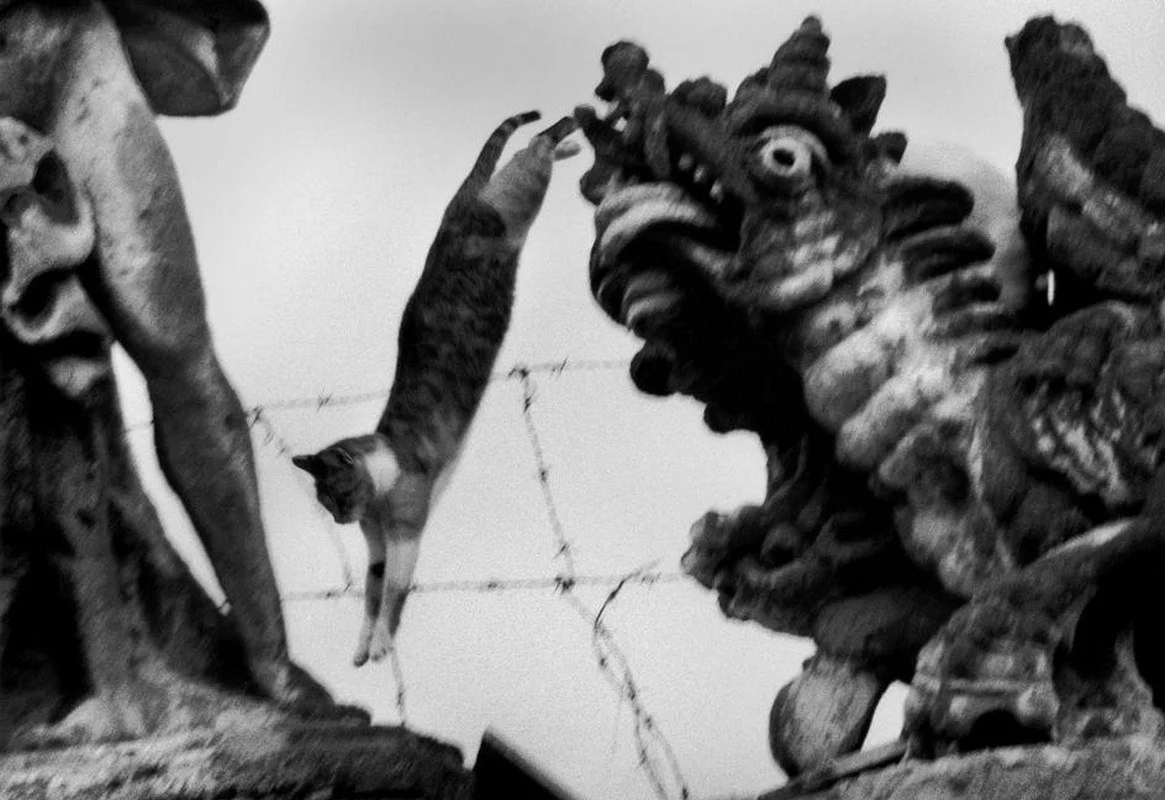
Figure 2. Ferdinando Scianna, Gatto a villa Palagonia, 1972, photographic print, Galleria Civica d'Arte Moderna e Contemporanea, Torino, Fondazione Arte CRT.
Colpisce, nella pagina del Villabianca, quel finale movimento mimico, teatrale, che poi troveremo nell’Ispettore di Gogol, per cui dal riso, che nasce dall’orrore oggettivato in forme di reperto clinico che assumono ritmo decorativo, bruscamente si passa alla soggettività, all’introspezione, all’esame di coscienza. “Di che ridete? Di voi stessi ridete,” dice Gogol agli spettatori che stanno ridendo della sorte di quei notabili che erano riusciti a corrompere il falso ispettore e apprendono che è appena arrivato quello vero. “Di che ridi? – dice il marchese a se stesso, a Goethe, a noi. – Questi mostri raccontano la tua favola.”[24]
This laughter, Sciascia argues, is prompted by “objectified horror,” here in the form of sculpted beasts, and stems from a sense of self-recognition. Beyond being mere representations of a certain fantasy, these monsters, in their orgy, objectify the human condition in a physical, visual format. In other words, the appearance of these monstersforces the viewer to introspect, to undergo an “examination of conscience.” Rather than representing the hedonistic delirium of the aristocracy in metaphorical, intangible terms, the monsters of Palagonia represent it visually, through the order of resemblances that connect their follia with Villabianca’s own stato d’anima. As Sciascia concludes, “Nel sonno della ragione, la Sicilia produceva [la sua]: di mostri, di superstizioni, di mistiche depravazioni, di mondo alla rovescia.”[25] Fantasy thus adheres to the Sicilian penchant for realism—not of a photographic realism, but of a psychological one. This psychology is actualized, objectified by self-identification with these monsters, a self-recognition which is itself reliant on the visual medium. The function of the monsters, in their imaginative creativity and innocent fantasy, recalls the fantasy and solitude of Giufà in the island’s collective psychology, and the role of said fantasy in the visual representation of an idea.
The monsters of Villa Palagonia even become something of a visual motif. In a brochure written for a 1982 exposition of the engraver Giacomo Porzano, Sciascia introduces the works of the artist by reminiscing over one of Porzano’s artworks in the author’s collection of engravings:
Dentro un cespuglio di foglie nere e aguzze, uno dei mostri di pietra della Villa Palagonia abbranca una donna viva, nuda, bianchissima a contrasto dell’adusta e minerale consistenza dell’essere mostruoso che per un momento si è svegliato in quel gesto e ora per sempre la trattiene. E mi pare che il disegno riassuma e condensi dei significati, sia una sintesi della visione del mondo e delle cose che Porzano da anni dispiega con coerenza, senza esitazioni o cedimenti, nella sua opera di disegnatore e di pittore. Il suo incontro con Palagonia non è, come per altri, un avvenimento propriamente pittoresco o di esteriore meraviglia. È qualcosa di più congeniale e profondo; una complicità, una solidarietà che a due secoli di distanza si stabilisce in una specie di giudizio in codice, in cifra, sull’uomo, sulla società, sull’esistenza. Alla base di un tale pregiudizio c’è la morale e la grazia, [. . .] la grazia dell’estetica.[26]
While this artwork in particular is not pictured nor named in the brochure, based on Sciascia’s ekphrasis I posit it to be (or be in the style of) Bomarzo (Fig. 3). The title of the image refers to a town in the Lazio region of Italy, just north of Rome, which is famous for a park filled with fantastical statues of monsters. Sciascia, in insisting on a reference to Villa Palagonia, places the artist within a greater history of Sicilian visual arts, forming a link, a ‘solidarity,’ between the ‘coded judgement’ Sciascia attributes to Palagonia and the that of the appearance of Porzano’s drawing; in other words, between the visive objectification of meaning through fantasy, and the identification of Porzano’s (supposed) visual quotation of this idea.
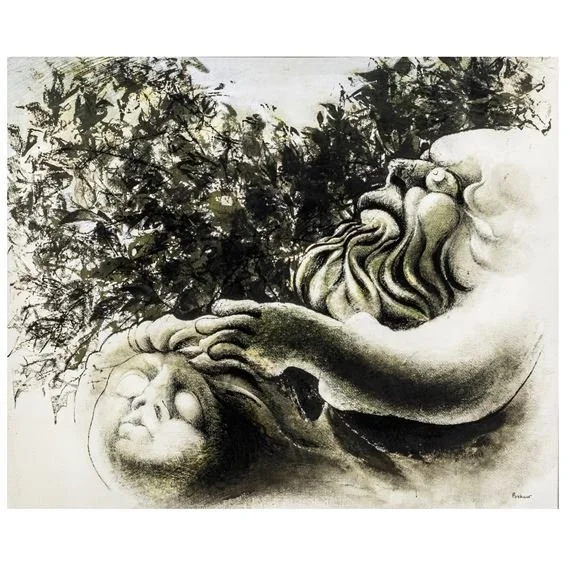
Figure 3. Giacomo Porzano, Bomarzo, 1961, ink and tempera on paper, private collection, MutualArt.
IV. Line and monochrome
Sciascia also identifies Porzano’s medium of drawing specifically that summarizes and condenses significance. Of another drawing by Porzano, Ragazza che si tocca un seno, also on exhibition but not pictured in the brochure, Sciascia describes the use of line in a similar manner: “in una unica linea sinuosa racchiude la gioia e il turbamento dell’adolescente.”[27] Here, linework is presented as a circumscription of significance, of edification—it is the visible contour that ‘encloses’ the immaterial ‘joy and anxiety of adolescence.’ Despite departing from realism in the classical sense, Porzano’s sketches still fit into this conceptual framework of objectivity. Somiglianza is a word with multiple valences. On the one hand, it may refer to a likeness, on the other, to form in its most basic sense: semblance, or the pure visual configuration of an object. This configuration exists most objectively in the visual simplicity and monochromaticity of a line.
Sciascia was known by many of his contemporaries to have an obsession with engravings, amassing an extensive collection over the course of his life.[28] To the author, these monochromatic mediums follow an “alfabeto dei segni più che colori,” much like literature.[29] Fellow writer and artist Vincenzo Consolo affirms that Sciascia “amava l’incisione che, con il loro segno nero si potevano accostare alla scrittura, erano anzi per lui un’altra affascinante forma di scrittura, simile allo scrivere che è ‘imprevedibile quanto il vivere.’”[30] Similarly, Gesualdo Bufalino, who shared Sciascia’s love for prints, explains that for the latter:
l’incisione, specialmente quando rinuncia alle arroganze e agli arcobaleni del colore e si contenta del suo antico alfabeto di bianchi e neri, è fatta della stessa sostanza di cui sono fatti i sogni, e com’essa cattura la vista dell’uomo e la fa diventare visione; e sa, nel suo breve rettangolo, sorprendere l’inesauribile cinema del mondo, e con pochi magri segni d’inchiostro, esaltare i lineamenti misteriosi delle cose, come li vede o li inventa un occhio tondo, ladro e curioso.[31]
The form of a line in its monochromaticity is understood as the essential form of sight, and thus of an image. It conveys meaning at its most concentrated, on par with the written word itself. Similarly, in photography, Sciascia identifies a perfect blend between realism and the monochromatic arts. A ‘true’ photograph is born from a moment of truth, an unrepeatable instant—an image, in other words, that emerges from a certain objectivity.[32] Sciascia, in his later years, did not mind being photographed, due to the objectivity presented by the medium. Photography, and specifically the portrait, captures the eternal essence of the depicted figure, creating “un luogo geometrico di un’esistenza”, that in turn reveals the “history of a soul.”[33] Sciascia links the phenomenological quality of monochromatic mediums to the photographic objectivity of the island’s own landscape. The alternating interplay of light and shadow of the Mediterranean sun on the natural and urban vistas of the island creates an essentialized image of black and white, a pure visual essence which burns into the retinas of the beholder. A burning, Sciascia adds, that approximates the burning of acid in the material process of engraving:
In pittura, siamo alla banalità; in acquaforte, siamo all’essenza. E si può anche forzare il testo fino a simboleggiare nel “nulla” che, dopo l'abbagliante contemplazione del paesaggio siciliano, resta negli occhi chiusi, la nera lastra su cui cadranno poi a scalfirla i segni dell’implacabile luce, la nera luce che solo una punta d’acciaio e la morsura degli acidi sanno dare – la nera luce dell'acquaforte.[34]
The monochromatic mediums of engravings, etchings, and photography are thus able to function in a similar way as Sciascia’s resemblances: in the monochromatic simplicity of a line, the image is able to present a sight (vista) as an initiator for more active forms of seeing (visione), and by extension, for reasoning. As such, like the order of resemblances that emerge from Antonello’s figurative realism, Sciascia links a certain objectivity to monochromatic mediums in their privileging the purest most objective contour of an image. The only difference between the objectivity of a resemblance and that of a contour is in the infinite possibility of abstraction in the latter.
Indeed, Sciascia also had a particular fondness for abstract symbolism and surrealism in their ability to bridge the realities of the metaphysical realm with the apprehendable objectivity of the physical.[35] Once again, like in Palagonia, fantasy is able to reveal something of reality—in fact, it can reveal more than accurate figural representation alone. While resemblances serve as a medium for navigating the material world, the infinity of ink is able to facilitate contemplation of the conceptual. Regarding the intellectual pursuit of monochromatic artistry, Sciascia states, “E l'acquaforte, il farla, si direbbe che comporti invece una condizione di solitudine [. . .] una riduzione di sogni materiali da far pensare quasi a una monasticità e comunque a un ritiro.”[36] If the fantastically fatalistic ‘solitude of Giufà’ places oneself in complete accordance with the state of the world in its visible actuality, then the solitary action of engraving, where a contour is unaccompanied by the distraction of colour, provides the opportunity to recreate that process of actualization by distilling an image into its monochromatic essence of a line, and burning it into the eye—thus, the mind—of the beholder.
Therein lies the crux of a Sciascian theory of art. Art functions not to visualize reason, but to gather reason from the visible. Meaning can only be conveyed through the objectivity of sight, which is then burned into the rational apparatus. This epistemology mirrors the solitary, fatalistic covenant between the Sicilian and the immediate world of perpetual actuality. Sciascia’s characterization of Sicilian art presents an exercise of logic not in rational terms, but rather of its inverse. Fantasy and inventiveness, far from standing in juxtaposition to reality, instead represent it and objectify abstract significance in visual terms. Rather than serving as a figure of exception in the ability to escape the condition of his geographical context, Sciascia understands the Sicilian artist as umbilically linked to the land of his birth, placing him as a product of an insular psychology—a certain ‘sonno della ragione,’ which, in fact, is its own reason.[1]
Endnotes
[1] Stephen J. Campbell, “Artistic geographies,” in The Cambridge Companion to the Italian Renaissance, ed. Michael Wyatt (Cambridge University Press, 2014), 17-39.
[2] Tr. “Constantly, in truth, do we see a particular country producing a particular kind of intellect fitted for a particular kind of work, for which others are not fitted, nor can they ever attain, whatever labours they may endure, to the goal of supreme excellence.” Giorgio Vasari, Le vite de' più eccellenti pittori, scultori et architetti (Bologna: Heredi di Evangelista Dozza, 1647), 233–234. Translation from Giorgio Vasari, Lives of the Most Eminent Painters, Sculptors, and Architects vol. V, trans. Gaston du C. de Vere (Medici Society, 1912-1914), 235, Project Gutenberg.
[3] Tr. “And if we marvel when we see growing in some province a fruit that has not been wont to grow there, much more can we rejoice in a man of fine intellect when we find him in a country where men of the same bent are not usually born. Thus it was with the painter Marco Calavrese.” Giorgio Vasari, Vite, 233–234. Translation from Giorgio Vasari, Lives, trans. Gaston du C. de Vere, 235.
[4] Tr. “If one wanted to refer to Antonello’s development to the artistic environment of Naples or Sicily, one would fall into error [. . .] since if an artistic tradition such as that of the linear was able to endow the an artist with a general comprehension of pictorial problems, the artistic tradition of the South was unable to give Antonello anything other than a refined handiwork, since it was otherwise utterly barren of even an elementary idea of style.” Roberto Longhi, “Piero dei Franceschi e lo sviluppo della pittura veneziana (1914),” in Scritti giovanili (Florence: Sansoni, 1961), 78. Translation (in part) from Stephen J Campbell, The Endless Periphery: Toward a Geopolitics of Art in Lorenzo Lotto’s Italy (The University of Chicago Press, 2019), 55.
[5] Tr. “it is not very persuasive that Antonello’s painting arrived spontaneously as though in a desert.” Leonardo Sciascia, “Il sorriso di Antonello è un mistero che ancora ci turba,” November 14, 1981. University of Toronto Sciascia Archive Project, Toronto, B. 5, env. 3. All further translations are by the author unless otherwise indicated.
[6] Tr. “A literary critic of our time has declared that he fails to understand how one can connect a life, and a life’s work, to a place. On our part, we cannot understand how one can engage in criticism without having understood this inviolable and inexhaustible rapport, in all its infinite possibilities of multiplying itself and refracting onto itself, in reifying itself, in camouflaging itself, in being repressed and hidden. No one ever has succeeded in completely severing this relation, in completely uprooting themselves from this condition – Sicilians least of all.” Leonardo Sciascia, “L’ordine delle somiglianze,” in L’opera completa di Antonello da Messina, ed. Gabriele Mandel, (Rizzoli, 1967).
[7] Giuseppe Cipolla, “La scrittura d’arte in Leonardo Sciascia: un caleidoscopio critico,” Quaderns d’Italià, 27 (2022), passim.
[8] Tr. “Visual logic in service of the invisible.” Cipolla, “ un caleidoscopio critico,” Quaderns d’Italià, 27 (2022), 94.
[9] Sciascia, “L’ordine delle somiglianze.”
[10] Tr. “a man’s measure is regulated by a bioethnic order of appearances [. . .] without appearances, there is no order, knowledge, or judgement.” Sciascia, “L’ordine delle somiglianze.”
[11] Sara Parisi, “Unravelling the Truth through Art: Ekphrastic Strategies in Leonardo Sciascia and Vincenzo Cunsolo,” Letteratura & Arte 19, (2021): 3–11.
[12] Tr. “A figured objectivity: of figures and appearances” Note that in Italian, the term figura also refers to the impression of one’s appearance in a social situation; e.g. una bella figura = a good impression. Sciascia, “L’ordine delle somiglianze.”
[13] Leonardo Sciascia and Marcelle Padovani, LaSicilia come metafora: intervista di Marcelle Padovani. (Mondadori, 1979): 44–45.
[14] Tr. “Where is Arab Sicily? Could it be in what the subjugated Arabs have done under Norman rule? No, this is not sufficient. Perhaps it exists in fantasy, in our blood – obscurely. In the countryside, in the human environment, in our names [. . .] [Spanish author Ángel] Ganivet was saying to [another Spanish author, Miguel de] Unamuno: ‘remove the Arabs from Spain’s history, and there will be nothing left of me save for my legs.’ Many Sicilians could say the same, even if everything would stay the same.” Leonardo Sciascia, “Sicilia antica: Sulle tracce degli arabi.” University of Toronto Sciascia Archive Project, Toronto, B. 1, env. 2.
[15] The character does in fact have roots in Islamic folklore, finding parallels with Nasreddin Hoca of the Turkish tradition, and Juha of the Arab one. For more information on the history of Giufà in Sicilian folklore as well as a compilation of stories, see Francesca Maria Corrao, ed., Le storie di Giufà (Sellerio, 2001).
[16] Leonardo Sciascia, “جحا,” in The wine-Dark Sea, trans. Avril Bardoni (NYRB, 2000), 81-91.
[17] Sciascia and Padovani, La Sicilia come metafora, 44–45.
[18] Tr. “In Sicily, it is a deeply rooted belief that, in order to be completely oneself, one must be alone. Solitude is a place of ‘self-rediscovery,’ for others divide us, dissect us, multiply us such that with others one cannot succeed at becoming a ‘being’[lit. creature], but only a character, and in order to merit the title of ‘being,’ one must escape towards solitude, one must be a solitary man [. . .] Once one is alone, they are fatally in agreement with the world – not thinking at all of transforming it, making it better or destroying it. The world is accepted as it is.” Note that the term creatura in Italian refers to the created state of a living being, or a being with a soul.
Sciascia and Padovani, La Sicilia come metafora, 46. Emphasis added.
[19] Tr. “A hope for external change, which never comes [. . .] Here reforms usually bring nothing.” Sciascia and Padovani, La Sicilia come metafora, 49–52.
[20] Tr. “How can you not be a pessimist in a country where the future tense doesn’t exist?” Sciascia and Padovani, La Sicilia come metafora, 45.
[21] Tr. “One finds this [sicilian] identity on the plane of artistic expression, and is called realism, given that Sicily awakens to art in contact with (typically external) movements that we can call ‘realistic’: Antonello da Messina in contact with Flemish realism. Sicilians have a particular attention to the real, which one can even find in that kind of photographic school of Palermo nowadays.” Sciascia and Padovani, La Sicilia come metafora, 43–44.
[22] Giuseppe Cipolla,“Ai pochi felici”: Leonardo Sciascia e le arti visive: un caleidoscopio critico. (Edizioni Caracol, 2020): 47.
[23] According to Maria Rizzarelli, the monsters represent “Il trionfo della follia, il sonno della ragione che invade l’isola e genera i suoi mostri proprio mentre (è questo il triste paradosso della storia) in Francia si celebrano i lumi della ragione. [the triumph of madness, the slumber of reason that invades the island and generates its own monsters while – and this is the sad paradox of history – in France they were celebrating the lights of reason]” Maria Rizzarelli, “Images à la sauvette: Sciascia, i fotografi e le fotografie,” il Giannone VII, (2009): 145. Cited from Cipolla, “Ai pochi felici”, 47.
[24] Tr. “Striking, in Villabianca’s pages, that mimetic, theatrical final movement, that we will then find in Gogol’s Inspector, for whom from laughter, rising from the objectified horror in the form of a clinical finding that assumes a decorative rhythm, abruptly passes to subjectivity, to introspection, to an examination of conscience. “What are you laughing at? You’re laughing at yourself,” says Gogol to the spectators who laugh at the luck of those who had succeeded in bribing the false inspector and learn that the real one has just arrived. “What are you laughing at?” says the Marquis to himself, to Goethe, to us, “these monsters are recounting your story.” Leonardo Sciascia, “Villa Palagonia, ‘il luogo più straordinario del mondo,’” L’ora, January 13, 1976. University of Toronto Sciascia Archive Project, Toronto, B.6, env. 15.
[25] Tr. “In the slumber of reason, Sicily produced [its own]: of monsters, superstitions, mystic depravations, the world upside down.” Sciascia, “Villa Palagonia.” Emphasis original.
[26] Tr. “Inside a cesspool of black, pointed leaves, one of the stone monsters of Villa Palagonia grabs a woman, alive, naked, and very white in contrast with the burnt, mineral consistency of the monstrous being, who, for a moment, has awoken in this gesture and restrains her, now and forever. And it seems to me that the drawing summarizes and condenses significances, that it is a synthesis of the vision of the world and the things that Porzano has been coherently developing for years, without hesitation or concession, in his work as a drawer and as a painter. His encounter with Palagonia is not, as for others, a moment of picturesque or external wonder. It is something more intimate and profound – a complicity, a solidarity that across the distance of two centuries establishes itself in a certain coded, ciphered judgement on man, society, existence. At the base of such a judgement lies morality and grace, [. . .] the grace of the aesthetic.” Leonardo Sciascia, “Giacomo Porzano,” catalogue to Expo Arte a Bari, March 22/28, 1982. University of Toronto Sciascia Archive Project, Toronto, B. 4, env. 10.
[27] Tr. “in a single, sinuous line [the artist] encloses the joy and the turmoil of the adolescent.” Sciascia, “Giacomo Porzano.” Emphasis added.
[28] Cipolla, Ai pochi felici, 137.
[29] Tr. “An alphabet of signs rather than of colours” Cipolla, Ai pochi felici, 138.
[30] Tr. “loved engravings which, in their black mark, are able to approach the status of writing. For Sciascia, they were even another fascinating form of scripture, similar to the act of writing which is ‘as unpredictable as it is to live.’” Cipolla, “Ai pochi felici,” 137–140.
[31] Tr. “Engravings, especially when the renounce the arrogance and the rainbows of colour, contenting themselves with their ancient alphabet of white and black, are made of the same substance as dreams, and as such capture the sight of mankind, turning it into vision. And they know, within their small dimensions, how to surprise the inexhaustible cinema of the world, and with a few thin marks of ink, how to enhance the mysterious essences of things, as seen, or as invented, by a round, conniving, and curious eye.” Note that the word lineamento in Italian refers to both a line or a contour in the literal, as well as an essential quality of an object in the figurative sense. Gesualdo Bufalino, “Sciascia amateur d’estampes,” Kalós. Arte in Sicilia VII, no. 3, (1995): 4–11. Cited from Cipolla, “Ai pochi felici,” 139–140.
[32] Leonardo Sciascia, “Fotografi veri,” in “Racalmuto nelle fotografie di G. Leone, M. Minnella, M. Pecoraino, F. Scianna, E. Sellerio,” Malgrado tutto, (1991): 32. Cited from Cipolla, “Ai pochi felici,” 174–175.
[33] Tr. “a geometric location of a being.” Leonardo Sciascia, “Il ritratto fotografico come entelechia,” in Ignoto a me stesso: Ritratti di scrittori da Edgar Allen Poe a Jorge Luis Borges, ed. D. Palazzo (Bompiani, 1987). Cited from Cipolla, “Ai pochi felici,” 176–178.
[34] Tr. “In painting, we are at banality; in etching, we are at the essence. And one can force the text to symbolize the ‘void’ that, after the dazzling contemplation of the Sicilian landscape, remains in the eye after it has closed: the black plate upon which the marks of the unforgiving light will fall and then scrape at it, the black light that only a point of steel and the bite of acid know how to create – the black light of an etching.” Leonardo Sciascia, preface to Sebastiano Aglianò, Questa Sicilia (Corbo e Fiore, 1982): 125–127. Cited from Cipolla, “Ai pochi felici,” 143.
[35] Parisi, “Unravelling the Truth,” 7–8.
[36] Tr. “And the act of creating an etching, one could say that it brings with it a condition of solitude [. . .] a reduction of material dreams that almost recalls a certain monasticity, or, in any case, a withdrawal.” Leonardo Sciascia, presentation for a catalogue to Nunzio Gulino (Galleria Arte al Borgo, 1973): 2. Cited from Cipolla, “Ai pochi felici,” 142.
[37] Listed in chronological order of creation