
Santa Maria della Salute: Marian Iconography and Symbolism as an Allegory of the Virgin’s Salvation
Written by Hena Chen, McGill University
Edited by Rachel Barker and Anna Robinson
The bubonic plague that spread across Europe in waves from the 13th century to the 18th century ravaged human lives, becoming a source of uncertainty and hopelessness for many. As the plague threatened societies, organizations, and families, people devised innovative solutions to confront the problem, some turning to, for example, islands of quarantine, while others reaffirmed their faith in hopes of being granted a miracle. This plague prospered in Venice, a small cosmopolitan city teeming with merchants and travellers, where the tight space, proximity to the sea, and flow of many visitors facilitated contamination. During the second wave of the bubonic plague alone, from 1630-1631, population records in Venice dropped from 140 000 to 102 243 people.[1] In response to the plague, the Senate of Venice commissioned a votive church dedicated to the Virgin Mary on October 22, 1630, as a plea for salvation. On October 26th, with a ceremony at the Ducal Chapel of San Marco chaperoned by the doge, the senate pledged an annual procession to the new church.[2] From the hopes of salvation emerged Baldassare Longhena’s Basilica di Santa Maria della Salute, consecrated in 1687 as the seventh church dedicated to the Virgin in Venice (fig. 1). The Italian term salute’s double meaning, advocating for health and salvation simultaneously, reflects the intentions behind the inauguration of the plague church. Longhena’s Salute quickly became the most prominent Marian church in the city, serving as a testament to the Virgin’s glory. Most importantly, as the prayer for salvation gradually seeped into the monument and permeated its core, the Basilica di Santa Maria della Salute came to embody the Virgin herself through the symbolism of significant dates relating to the building, the iconography consecrated to the church, and the meaning behind the structure.
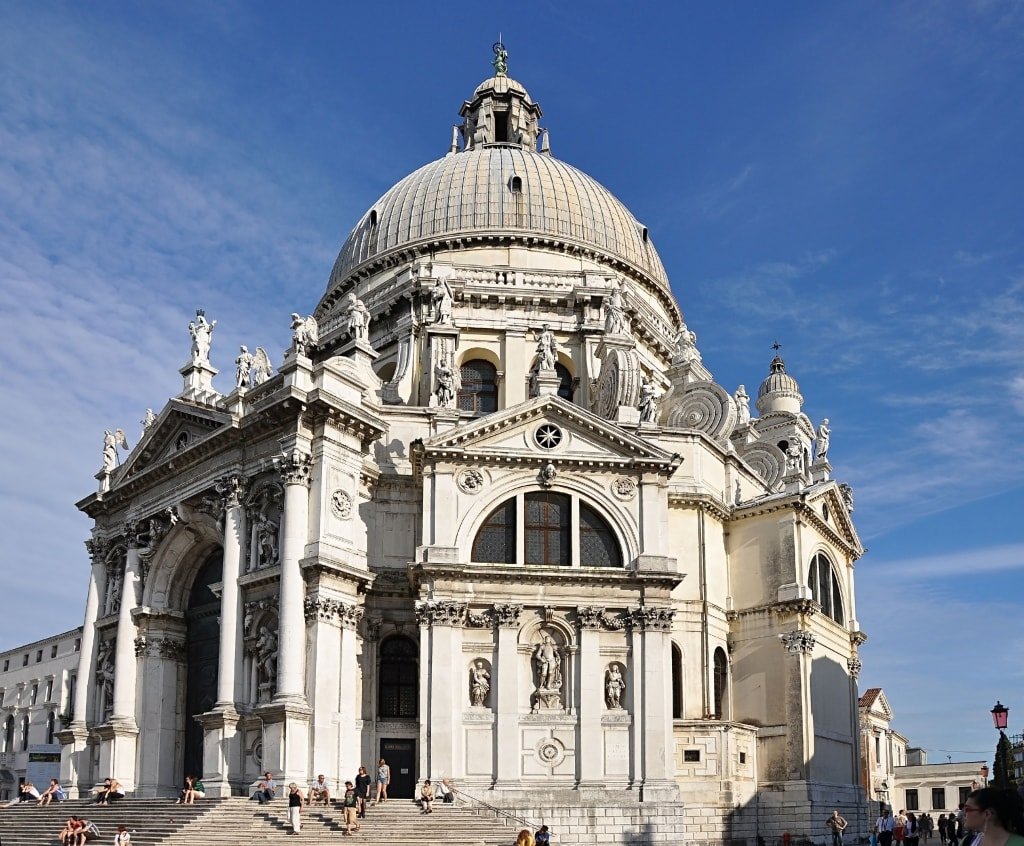
Figure 1. Baldassare Longhena, Santa Maria della Salute, c. 1687, Istrian limestone, 47 x 70 m, Venice.
Since the very beginning of the construction of Santa Maria della Salute, important dates relating to events in the Virgin Mary's life were incorporated into the planning of the votive church. By associating the building as much as possible with the Mother of Christ, Venetians hoped to achieve deliverance from the plague through her divine aid. First elevated to divinity in 1477 along with the Trinity, an official proclamation encouraged her cult, institutional rallying, and architectural forms of worship to honor of her Immaculate Conception.[3] Worshipped as a mortal born free of sin, many occasions relevant to the Virgin's life were hence celebrated by ceremonies held in Venice and at the Salute. For instance, on March 25th, the Day of the Annunciation, began the salvation of the world as the archangel Gabriel revealed to Mary that she would bear Christ. Similarly, the foundational myth of Venice sustains that the city was born on the Feast Day of the Annunciation in the year 421, linking its very foundations to the Virgin. As such, it was decided that the Santa Maria della Salute’s foundation stone be placed on March 25th, 1631, on the anniversary of the Annunciation.[4] Such a decision reflects a religious superimposition of the significance of the Annunciation: just as the Annunciation spurred the salvation of the world with the promise of Christ’s arrival, the start of the Salute’s construction on March 25th would become Venice’s salvation against the plague. Furthermore, the month of March was recognized as the beginning of a new year, where the Feast of the Annunciation and a yearly procession were conducted by the doge in honor of the Madonna di Marzo. Through its link with the Annunciation, the month of March becomes a synonym for hope, renewal, and new beginnings – all essential in order to conquer the plague.[5]
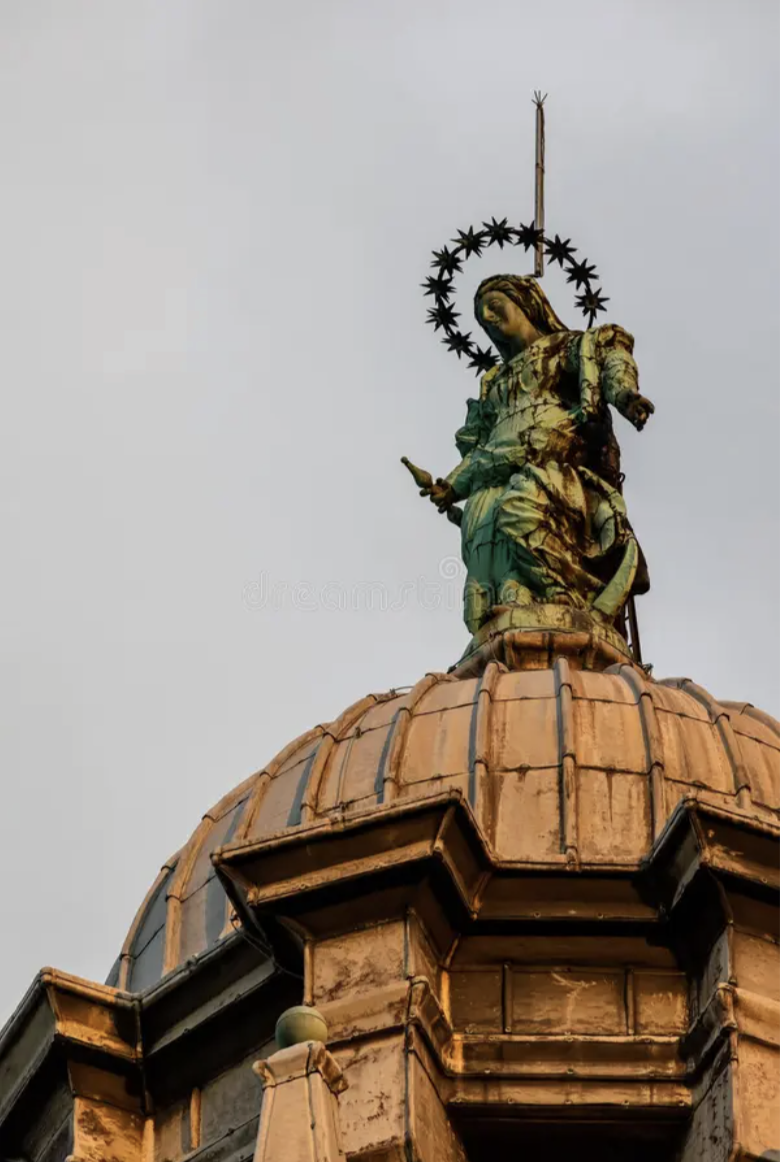
Figure 2. Unknown, Virgin with Twelve-Star Crown and Baton, c. 1687, bronze, Santa Maria della Salute, Venice.
The Virgin’s relevance to the Salute and Venice’s salvation stems from her identity as a mortal who serves as an intercessor to the divine. Her humility before her Son defines her role as a mediator for humanity on the Day of Judgment, advocating for mercy in His justice. In addition, the Mother of Christ's virginity is proof of her uncorrupted body that proved pure enough to channel the Son of God and granted her the role of guiding humanity through darkness.[6] Combined, the Virgin’s Immaculate Conception and her identity as Theotokos (Mother of Christ) ultimately crown her as Queen of Heaven as she rules suspended in the heavens: “clothed with the sun, a crescent moon under her feet, and with a crown of twelve stars upon her head (Revelation 12:1).”[7] Such a depiction of her is reflected on the dome of the Santa Maria della Salute where a bronze statue displays the Virgin adorned with her starry crown as she grasps a baton with a crescent moon under her feet (fig. 2).
Situated at the pinnacle of Longhena's votive church, this dome statue's significance lies in its effective portrayal of the Virgin as a protector watching over the Venetian population. From her vantage point, she shields the people from the plague, and also acts as a capitano generale da mar (commander of the navy), guarding the maritime city from war with her traditional baton of command.[8] As Venice battles the Ottoman Turks, the military baton further ascertains her guidance, a symbol of her favor that will propel her Venetian followers to victory. Furthermore, the choice of placing the Virgin of the Immaculate Conception on the lantern of the main dome likely stems from an ode written in 1657 by Baldassare Bonifacio, where Mary is referred to as Star of the Sea.[9] She is compared to an eight-sided star for her eight-sided purity and the eight beatitudes. As Bonifacio explains: “If Venice alone among cities sits in the middle of the sea, and if you Virgin are star of the sea, you are therefore the only star of our virgin Venice… [and in] such a frightening and terrifying storm, she turns to you, and has with solemn and public vow decided to erect a new temple in your name, dedicated to Mary as Liberator, or Mary of Salvation.”[10] A parallel can then be drawn between the Virgin being the only star in the sky as Venice is lost at sea and her being the only hope as Venice perishes from illness. Both interpretations of Venice as capitano da mar and Star of the Sea are thus woven directly into the allegory of the Virgin as salvation as she watches over the city from a vantage point.
Longhena, the architect of the Salute, also made sure that the structure itself embodied Mary as Queen of Heaven. Indeed, in his planning of the building, he expressed: “The mystery contained in the dedication of this church to the Blessed Virgin made me think, with what little talent God has bestowed on me, of building the church in forma rotonda, i.e., in the shape of a crown.”[11] Longhena's decision returns to the idea of transposing the Virgin’s Immaculata identity onto the structure of the Salute, which the architect built in a centralized octagonal shape reminiscent of the Virgin’s signature eight-sided star, with large figures of the twelve apostles under the dome, representing the twelve stars of the Virgin’s crown (see Fig. 2). Similarly, the scroll-shaped buttresses that support the dome are also topped by statues of the apostles. This symmetrical rendering of the structure and of the apostles thus creates a “crown-shaped” building honoring Venice's pledge to the Queen of Heaven while also personifying the Salute as the Immaculata with its shape representing the Virgin’s crown and its interior symbolizing her womb.[12] Taken together, these structural details recall the Virgin’s symbols, infusing her presence into a building where the faithful might find themselves immersed in her healing embrace.
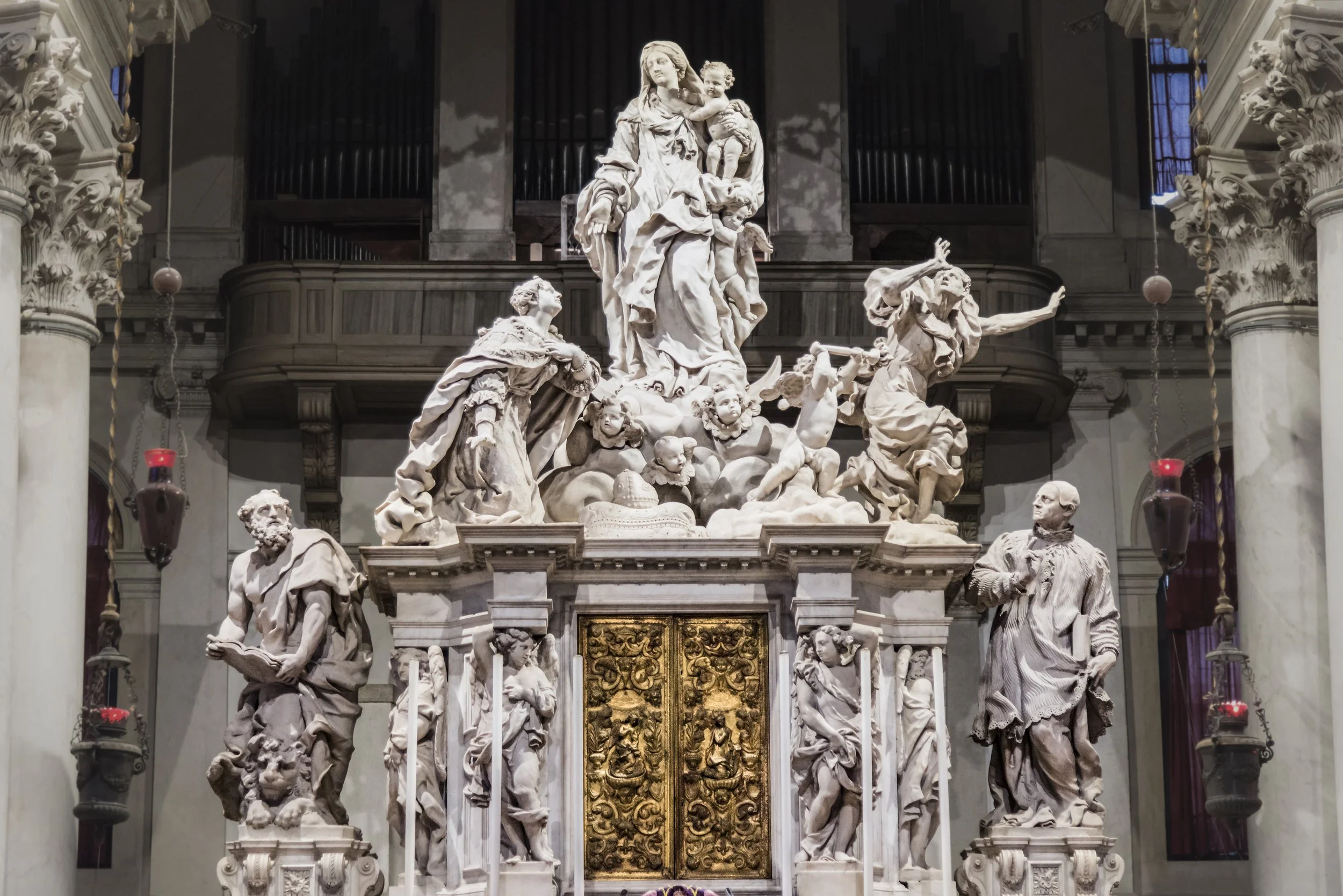
Figure 3. Josse de Corte, Queen of Heaven Expelling the Plague, c. 1670, marble, 47 x 70 m, Santa Maria della Salute, Venice.
Inside the Santa Maria della Salute, a space rich in Marian iconography is decorated with piers and chapels to facilitate the visitor’s complete view of the church. However, despite the symmetry of the Salute's design, one element of the interior is artfully framed to appear first in any visitor’s field of vision. Dominating the view of the entrance, the high altar of the Salute presents itself as the center of spirituality, unifying the church’s infrastructures at the culmination point of a scenic progression.[13] This specific spotlight on the high altar originates from the committee that selected the architect of the Salute. The challenging requirement that the high altar be clearly visible from the entrance, whilst the other altars should come into view as one moved through the church, made Longhena’s design submission ultimately succeed.[14] As it stands today, the prominent high altar holds a marble altarpiece rendered by Josse de Corte, presenting Mary as The Queen of Heaven Expelling the Plague (Fig. 3). This piece combines a group of statues to express a scene of devotion in the face of salvation. Showcased as the Madonna della Salute with her Child in her arm, the Virgin Mary is flanked on the left by a personification of Venice, kneeling to pay homage to her for her aid. On the right, an old hag personifying the plague is chased away by an angel. De Corte's usage of white marble in the Madonna della Salute additionally reinforces the Virgin of Immaculate Conception’s theme, as she was traditionally depicted clothed in white robes.[15]
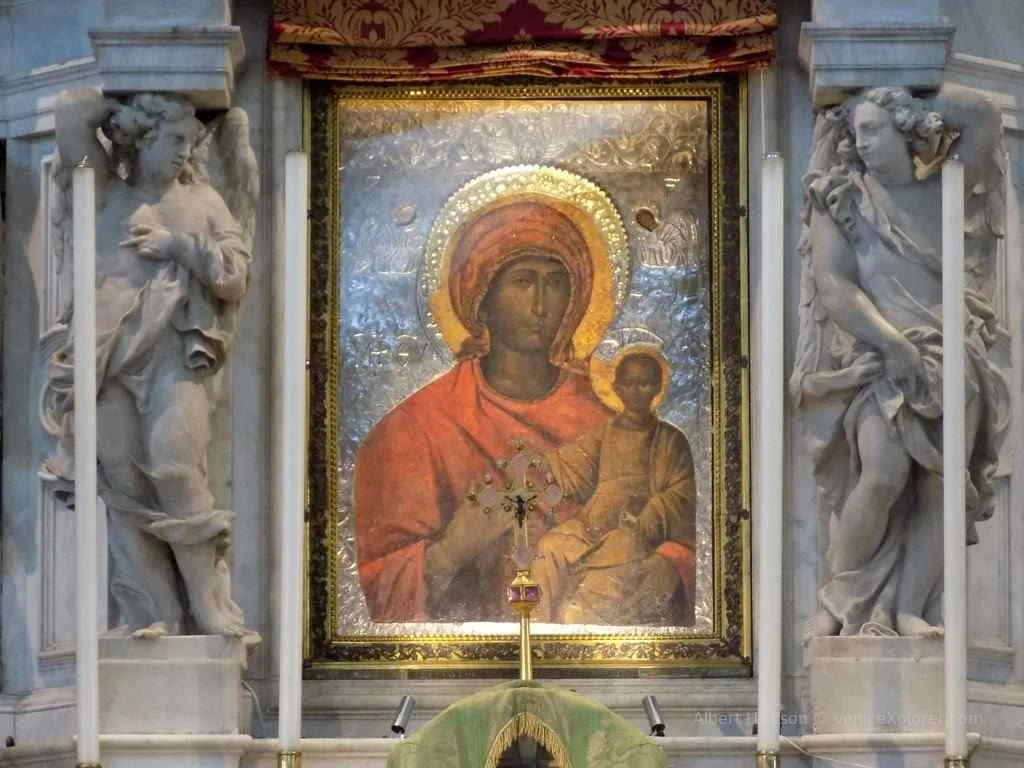
Figure 4. Unknown, Madonna and Child (Panagia Mesopantitissa), c. 12th century. Santa Maria della Salute, Venice.
Josse de Corte's altarpiece recording the Virgin’s divine intercession in saving Venice from the plague quickly became an object of fervent devotion. Visited yearly by the doge’s procession on November 21st, Venetians celebrated the Madonna della Salute on the day of the Feast of the Presentation of the Virgin and the Festa della Salute.[16] Between these two celebrations, the Feast of the Presentation of the Virgin commemorates Mary's presentation to God at the Temple of Solomon in Jerusalem, whilst the Festa della Salute is the name of the annual procession at the Salute honoring the vow made to Venice’s Lady of Health. Circling back to the Presentation, the 21st of November derives even more importance as the day on which the Senate had decided to announce that the city was free from the plague.[17] Furthering the connection between the building and the Presentation, in 1644, Lorenzo Longo, in a poem, associated the Temple of Solomon with the Salute by recounting both structures’ fifteen steps leading to their entrances, one for each of the fifteen gradual Psalms. Though in reality, the Venetian church has sixteen steps, other features like its pairs of great columns were also linked with features of the Biblical temple.[18] Moreover, it was a belief that the octagonal Dome of the Rock in Jerusalem was the Temple of Solomon, where the Presentation took place, hence the centralized eight-sided shape of the Salute.[19] A comparison can thus be traced between Mary stepping into the Temple of Solomon to meet God and Venetians stepping into the Salute to meet the Madonna of Health for deliverance from their illnesses. Indeed, the yearly procession to the Salute represents a devotion to the sacred that mirrors the Virgin's purity and the fervency of her prayer at the temple of God.
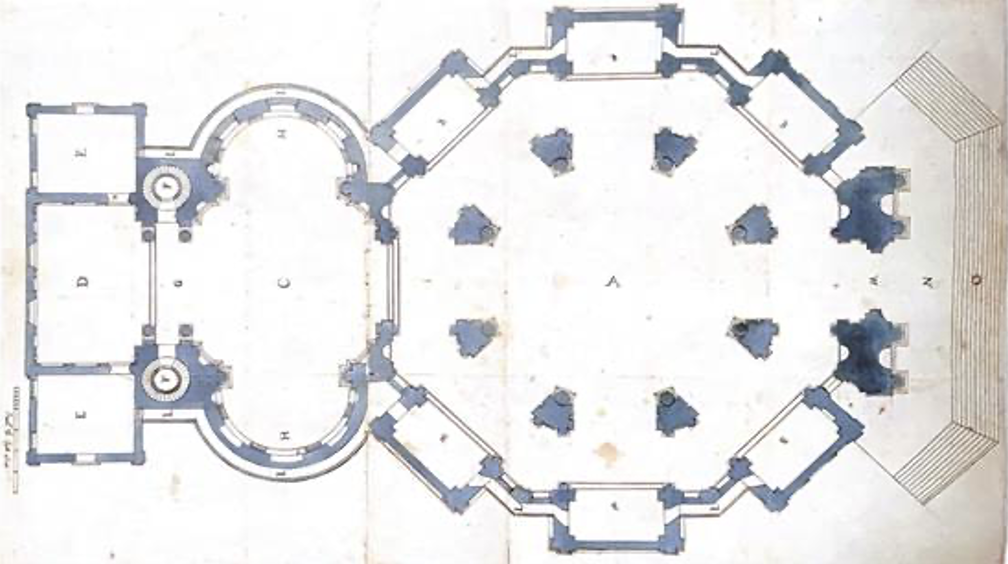
Figure 5. Baldassare Longhena, Plan of Santa Maria della Salute, c. 1631, sketch on paper, Archivio Parrocchiale di S. Maria in Vallicella, Rome.
Beneath the imposing group of statues, an icon of the Virgin Mesopantitissa is displayed on the high altar, further honoring the Virgin’s divine help to Venice (fig. 4). This portrait, transported from Crete to the Salute in 1669, features the Virgin and Child rendered with a dark face but a penetrating gaze. The Mesopantitissa, also known as “Madonna the negotiator,” highlights the Virgin’s role in appealing for the clemency and mercy of God on behalf of mortals.[20] As she negotiates for Venice’s liberation from the plague, the Mesopantitissa pictures the Virgin Mary as an intermediary to God, with Josse de Corte’s altarpiece (see fig. 3) becoming proof that she won God’s favour in the name of the Venetians, therefore saving the city under His will.
Complementing the high altar, eight sides of the octagonal building of the Salute bring out six radiating chapels with corresponding altars, with an ambulatory spacious enough for the yearly ducal procession (Fig. 5). Longhena’s project memorandum stated:
There will be six chapels with six altars closed off by balustrades, with [a] corridor which will serve to go around from chapel to chapel very commodiously in order to pass with the Host without passing into the church; and if one stands in the middle [under] the main dome, that is in the middle of the church, an immensely enjoyable view of all the chapels and altars will be had.[21]
Indeed, the architect’s design of the Salute’s centralized dome and of its altars works in harmony to ingrain the presence of the Virgin into the building. The side altars only enhance the Marian theme of salvation within the church, which is further emphasized by the imposing high altar. Five of these six altars are dedicated to major feasts of the Virgin’s life, reinforcing the vow made to the Queen of Heaven to dedicate the Salute entirely for her salvation.[22] The side altar paintings honoring the Virgin include Pietro Liberi’s Annunciation to the Virgin, Titian’s Descent of the Holy Spirit, and Luca Giordano’s Assumption of the Virgin, Birth of the Virgin, and Presentation of the Virgin in the Temple. An extra painting was commissioned to honor Saint Anthony of Padua and figures on the eastern side altar of the Salute. Though this piece does not depict the Virgin, the subject, Saint Anthony, is associated with the Virgin Annunciate through his birth date of March 25th, thereby affirming the devotion of local saints at the Salute. The five other altar paintings are relevant to the theme of Marian salvation with Birth of the Virgin honoring Mary’s arrival in the world, Presentation of the Virgin in the Temple celebrating her future identity as Mother of Christ, Annunciation to the Virgin announcing her role in bringing forth her Child the Savior, Assumption of the Virgin commemorating her ascension to the heavens to rule as a just Queen, and Descent of the Holy Spirit depicting Mary as the mother of all faithful as the Holy Spirit is sent by Christ after his sacrifice to save humanity resulted in his Ascension.[23]
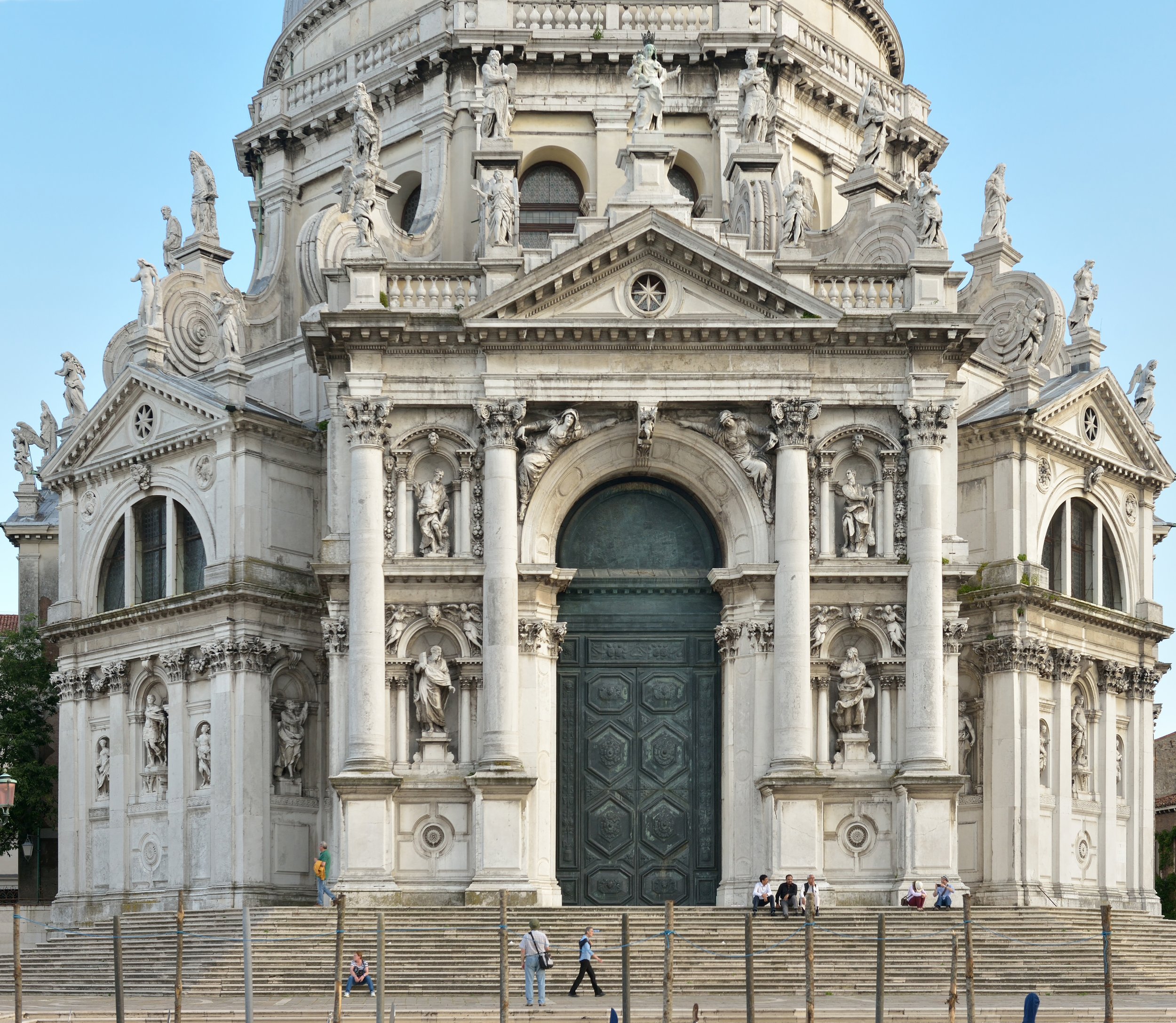
Figure 6. Baldassare Longhena, Façade of Santa Maria della Salute, c. 1687, Istrian limestone, Santa Maria della Salute, Venice.
Finally, the motive of the Salute’s construction, though desperate and morose, ensured that the church developed into a triumphal building, celebrating the Virgin’s victory over the bubonic plague. Consequently, as seen above, the Santa Maria della Salute professes the Queen of Heaven’s glory in diverse aspects of its composition. Though the symbolism of salvation and liberation within the Salute is plentiful, its exterior extends the narrative by reinforcing the Virgin’s triumph. Indeed, the façade of the church takes the shape of a triumphal arch with its pediment crowned by the Virgin, declaring her success in freeing Venice from the plague (fig. 6). Sibyls who were said to have announced the coming of Mary decorate the spandrels of the arch, and four Victories adorn the spandrels of the lower-level niches flanking the door of the façade.[24] This triumphal gateway leading into the Salute and to its high altar is particularly significant for ceremonial processions as it creates a victorious setting honoring the dominance of the Virgin over the plague. Moreover, Santa Maria della Salute, as a ducal church under the patronage and protection of San Marco since 1656,[25] figured among a list of churches throughout the city that warranted Andate Ducali, or ducal visits. During the annual ceremony at the Salute on the Feast Day of the Presentation, the doge, the signoria, and the senate would travel to the church from San Marco, enter the Salute, and sit in the sanctuary to attend the performance of a low mass by the priest at the altar. A Te Deum would then be sung, and the procession would depart from the Salute to come back the following year.[26] During this procession, all the elements discussed previously would converge for the glory of the Virgin’s liberation of Venice: the circular building provided enough ambulatory space and an enveloping atmosphere, the altars of Marian iconography would elevate her presence, the high altarpiece and the Mesopantitissa would be emphasized through the structure of the church, but also through the morning light shining onto the main altar giving it a mystical glow, and the triumphal façade would debut and conclude the ceremony with all the glory of the Virgin’s victorious salvation of Venice.
Baldassare Longhena’s votive church of Santa Maria della Salute embodies the Virgin Mary’s salvation of Venice from the bubonic plague. The Salute channels the Venetians’ devotion by incorporating symbolic attributes of the Virgin into its design and iconography, thereby complementing and elevating the ceremonies performed on significant dates related to the Virgin. The Salute now stands as an eternal monument of the Virgin’s clemency towards the ill, her blessing of good health a landmark for pilgrims and tourists alike. In fact, one who walks into the church today may still see a seventeenth-century floor tondo encased in a crown of roses reminiscent of the Virgin’s Rosary with the inscription Unde origo inde salus at its center.[27] This phrase, which translates to “whence our origin thence our salvation,” reaffirms the connection between the Virgin and Venice’s mythical origins to this day. Just as the Annunciation to the Virgin heralded the salvation of the world with the arrival of Jesus Christ, the city's foundational connection to the Lady of Health prefigured the deliverance of Venice from the plague.
Endnotes
[1] Gordon M. Weiner, “The Demographic Effects of the Venetian Plagues of 1575-77 and 1630-31,” Genus 6, no. 1-2 (1970): 42.
[2] Andrew Hopkins, Santa Maria della Salute: Architecture and Ceremony in Baroque Venice (Cambridge University Press, 2000), 3-4.
[3] Chriscinda C. Henry, “The Shrine Church as a Treasury: Santa Maria dei Miracoli,” lecture, McCall McBain Arts Building W-215, McGill University, Montreal, QC, February 6, 2025.
[4] Frederick Hammond, “Bernini and Others in Venetian Ambassadorial Dispatches, 1623-1644,” Notes in the History of Art 4, no. 1 (1984): 31.
[5] David Rosand, Myths of Venice: The Figuration of a State (The University of North Carolina Press, 2012), 13.
[6] Rosand, Myths of Venice, 19.
[7] Rudolf Wittkower, “S. Maria della Salute: Scenographic Architecture and the Venetian Baroque,” Journal of the Society of Architectural Historians 16, no. 1 (1957): 6.
[8] Martina Frank, “Representing the Republic in Seventeenth-Century Venice,” Journal of the Institute of History of Art, no. 43 (2019): 118.
[9] Hopkins, Architecture and Ceremony, 87-89.
[10] Hopkins, Architecture and Ceremony, 87-89.
[11] Wittkower, Scenographic Architecture, 6.
[12] Wittkower, Scenographic Architecture, 6.
[13] Wittkower, Scenographic Architecture, 8.
[14] Deborah Howard, “Baldassare Longhena” In The Architectural History of Venice (Yale University Press, 2002), 217.
[15] Hopkins, Architecture and Ceremony, 81.
[16] Howard, Baldassare Longhena, 216.
[17] Andrew Hopkins, Baldassare Longhena and Venetian Baroque Architecture (Yale University Press, 2012), 67.
[18] Hopkins, Architecture and Ceremony, 75.
[19] Hopkins, Architecture and Ceremony, 95.
[20] Frank, Representing the Republic, 119.
[21] Hopkins, Baldassare Longhena and Venetian Baroque Architecture, 61-62.
[22] Hopkins, Architecture and Ceremony, 75.
[23] Hopkins, Architecture and Ceremony, 73.
[24] Hopkins, Architecture and Ceremony, 133.
[25] Hopkins, Architecture and Ceremony, 61.
[26] Hopkins, Architecture and Ceremony, 149.
[27] Frank, Representing the Republic, 118.