
Secular Made Sacred:
Seventeenth-Century Sevillian Charity as Seen Through Bartolomé Esteban Murillo’s Images of Childhood at the Alte Pinakothek
Written by Jade Xiao, Harvard University
Edited by Nitya Khirwar and Anne-Lise Mocanu
Introduction
Melancholic gloom permeates through the obsolete corner, while the meager streaks of light imbues the scene with tumultuous chaos. The turbulent skies swirl with muddied clouds, darkening the desolate settings with its overpowering, murky shadows. The once-magnificent architecture crumbles into dust and scatters into pieces of ruinous remains, dismal and forgotten. Wild seedlings flourish against the barren, dilapidated remnants, a melancholic reminder of the unrelenting cruelty of oblivion. Within these grim landscapes are clusters of children, clad in tattered clothing, torn and frayed on every seam. Their bare feet, ashened from their neglected environs, testify to their quotidian toils. From an initial perusal, impoverished desolation pervades the scene.
However, neither the bleak environs nor the dirt-covered clothing could diminish the brilliant, beaming light on the children’s expressions. In stark contrast to their somber settings, the youths rejoice in their own minute delights. In The Pie Eaters (Fig. 1), two boys huddle closely together, satiating their appetite with a delectable pie, the spoils of their feast strewn on the ground. The boys of the Grape and Melon Eaters (Fig. 2) share a mischievous, knowing glance as they enjoy the delightful fruits. In Three Boys Playing Dice (Fig. 3), the thrilling game evokes a visible radiance on the children's naive visages, while in the Young Fruit Sellers (Fig. 4), a pair of children sits closely together on the ancient structure, quietly yet contently counting their profits of the day. The carefree child in Old Woman Delousing A Boy (Fig. 5) lounges comfortably on the floor, stuffing his face with bread and playing with his attentive pet. The genuine contentment and modest beauty of these children penetrate these compositions, piercing through their melancholic bleakness.
Though renowned for his moving religious compositions, Bartolomé Esteban Murillo dedicated remarkable time to genre paintings, five of which arrived in the Munich Alte Pinakothek collection in the late seventeenth to eighteenth centuries.[1] Murillo’s extensive and prolific production of these images was noteworthy for the low status of the compositions in the hierarchy of genres, as art theorists frequently criticized their depictions of quotidian, even “inferior,” subjects.[2] Such compositions were deemed as “pittura ridicola,” a satirical representation intended for the demeaning mirth and moralizing condescension of elite viewers.[3]Through the cosmopolitan mercantile society and the collections of his prominent patrons, such as Nicolás Omazur, Murillo must have been eloquently-versed in the traditional attitudes towards the genre and its demeaning representations of its impoverished subjects. However, despite his awareness of the conventional depictions and inspiration from these traditions, Murillo recast the genre in an entirely novel light. Unlike the unidealized and even veristic portrayals of poor subjects in the conventional types, Murillo’s children possess an ethereal radiance and innate divinity. In his prolific oeuvre of childhood compositions, Murillo bridges the distance between the secular and the divine, fabricating a new hybrid genre that sanctifies his poor figures. His compositions coincided with a period of devastation in Sevillian history, as catastrophic natural disasters ravaged the city, precipitating a novel, symbiotic relationship between the affluent and poor through the culture of charity. Incubated within these remarkable cultural developments, Murillo’s childhood paintings are inextricable from the rich discourse on poverty. The dignity that Murillo bestows upon these children elevates them from mere impoverished street urchins into autonomous, assured subjects. By transfiguring the traditional trope of genre paintings and imbuing the poor subjects with a sense of self-possession, Murillo engages with the ideology of the sanctus pauper, glorifying the poor as holy figures with the immanence of Christ. Moreover, by focusing his compositions on children, Murillo ennobles the image of the poor as the model paragon for Christians, with Christ-like attributes. Conceiving of his secular paintings of childhood in the same realm as his religious compositions, Murillo constructs a visual parallel between the secular and the divine. Rather than saturating his images with demeaning ridicule or veristic realism, Murillo develops his own genre of secular-religious paintings between the sacred and secular. An analysis of the collection at the Alte Pinakothek in Munich, from its iconographies to receptions reveals the complexities and contradictions of seventeenth-century Seville.
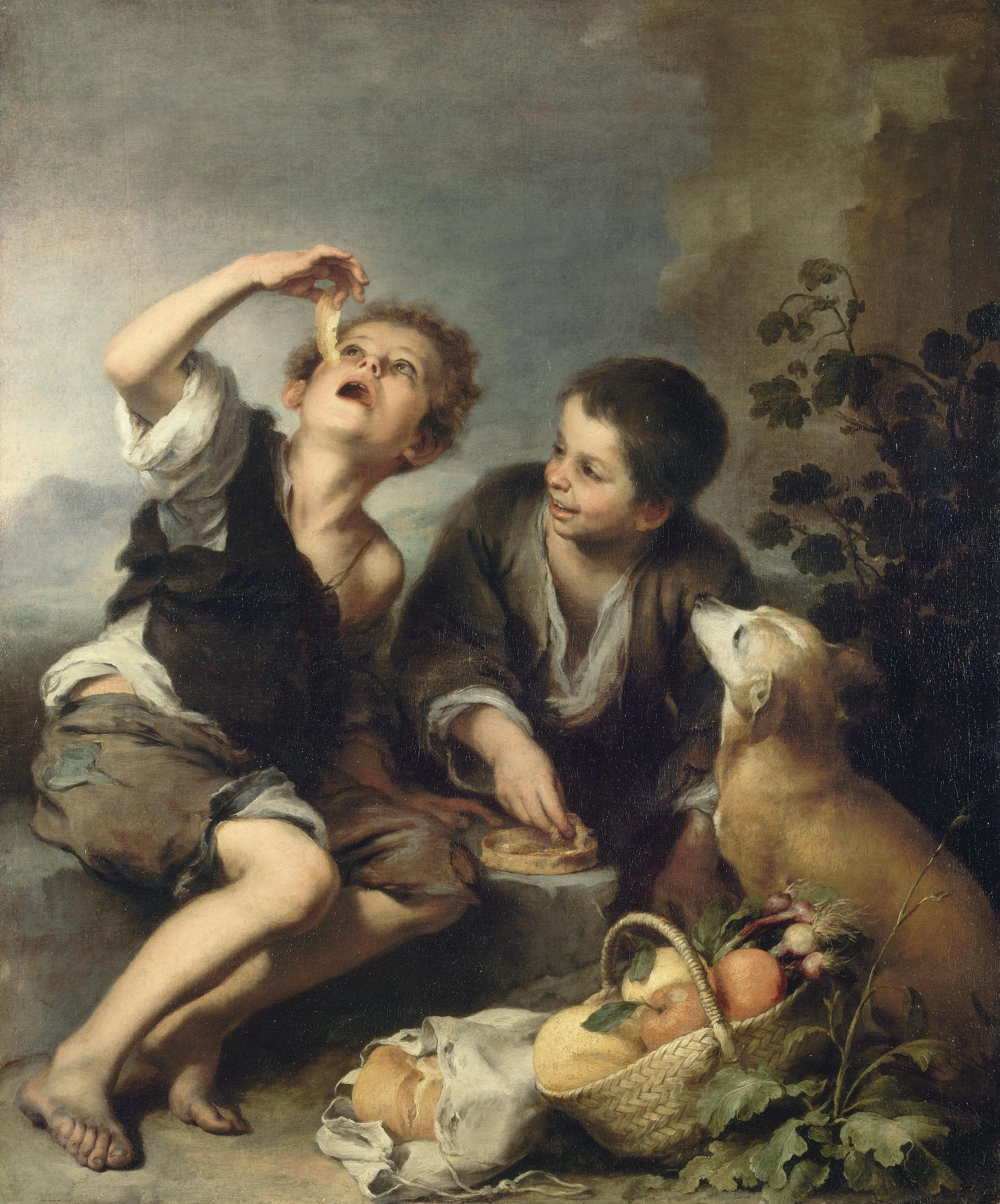
Figure 1. Bartolomé Esteban Murillo, The Pie Eaters, 1670–1675 Oil on canvas, 123 × 102 cm. Alte Pinakothek, Munich, Germany.
Calamities and Charities
Though the scenes of childhood are set in nondescript, imaginary landscapes, Murillo’s sanctifying paintings are inextricably rooted in the social, religious, and political world of seventeenth-century Seville. In the fifteenth and sixteenth centuries, Seville thrived as a lively port city at the heart of the formidable Spanish Empire that possessed the highly-profitable trading monopoly with the New World.[4] Yet, the commercial triumphs dissipated at the dusk of the sixteenth century, as the supplies of silver, one of the empire’s most valuable commodities, diminished, and the tumultuous trading relations in the Indies suffered.[5] Concurrently, within mainland Spain, the domestic economy and politics deteriorated; the government imposed significant taxes on the citizenry to fund foreign wars, provoking economic distress and social discontent.[6] Seville’s coveted position as the seat of the trade monopoly was likewise waning: Cadiz, a city on the western-most coast of Spain, emerged as a more favorable location for ports, as Seville’s in-land position became inconvenient for larger trading vessels;[7] by the 1680s, Cádiz and Sanlúcar recorded receiving more fleets than Seville, exemplifying the changing tendencies and the disfavoring of Seville.[8] Unfortunately, during Murillo’s lifetime, and especially his most artistically-prolific years, further calamities decimated Sevillian society. A disastrous plague struck the city in 1649, halving the population of the city from 120,000 to 60,000 within five months.[9] The catastrophic epidemic and resulting extreme depletion of labor led to the devastating famine of 1651 that exacerbated the condition for the Sevillian people, leaving innumerable impoverished and disillusioned.[10] Two decades later, the resurgences of the plague and famine in 1678, an earthquake in 1680, and another epidemic in 1682 further wrecked the city.
Children, in particular, were profoundly affected by the disasters. The abandonment and orphaning of children were pitiful afflictions in the city since before the tragedies of the seventeenth century. The founding of the Brotherhood of Santo Niño Perdido in 1589, dedicated to the protection of masterless children, underscored the ubiquity of orphaned children and the appalling circumstances.[11] By 1593, the heartwrenching crisis became so prevalent that the city plazas and streets were “full of small boys who wander about lost and begging and dying of hunger and sleep in doorways and on stone benches by the walls, poorly dressed, almost nude, and exposed to many dangers . . . and others have died of freezing by dawn.”[12] The harrowing conditions for the children only exacerbated in the seventeenth century, and thus the number of orphans escalated substantially.
Such calamitous omnipresence of destitution provoked a contentious discourse on poverty. The Middle Ages conceived of the poor in a positive, benevolent light as the sanctus pauper, or the holy poor; yet, in the fifteenth and sixteenth centuries, the Catholic theological evaluation of the poor turned less sympathetic, and their divine status as the link to salvation diminished.[13]However, tragedies from the following century reignited favorable opinions. The devastating, pessimistic circumstances of seventeenth-century Seville, with the prevailing atmosphere of poverty and death, aggravated the suffering of the poor and led to the revival of the concept of the sanctus pauper.[14] In 2 Corinthians 8:9, the scripture described Christ’s self-poverishment for the welfare of others, as “for though he was rich, yet for your sake he became poor, so that you by his poverty might become rich.”[15]Thus, poverty became a divine quality directly connected to Christ,, as Christ was seen as immanent in the beings of the poor. In Luke 6:20-21, Christ elevates the divine status of the poor men, for “blessed are you who are poor, for yours is the kingdom of God.”[16] Through the proliferation of the sanctus pauper ideology and scriptural mandates, caring for the poor became both a political and religious obligation. Religious brotherhoods of charity, such as Hermandad de la Santa Caridad, led by head brother Miguel de Mañana, flourished with the influx of contributions and memberships from Sevillian elites. Elected in 1663, Mañana advocated for the benevolent treatment of the poor and enacted rigorous rules in his treatises, greatly expanding the influence and almsgiving of the charity during the catastrophic period.[17] Under the dominating leadership of such prominent men and the visible demonstrations of virtues, charity became an integral, and even fashionable, part of Sevillian society.
The societal discourse of poverty was profoundly impactful on Murillo and his works, who had been considered a man of charity and morality even prior to the disastrous period of Sevillian history. Orphaned in his childhood as the youngest of eleven children, Murillo was particularly sympathetic towards poverty, joining the Confraternity of the Rosary and becoming a member of the Franciscan Third Order, an order that particularly revolved around charity and services to the poor.[18] In 1665, despite the innumerable restrictions by birth, status, and wealth, Murillo was admitted into the Brotherhood of Charity after a five-year long petition process, a testament to his virtuous character.[19] Within the brotherhood, Murillo performed practical care for the destitute and contributed a monumental cycle of the Seven Works of Mercy to the church, conflating his personal and professional devotions.[20] In his biography, Antonio Palomino marvelled at not only Murillo’s pictorial mastery, but also his noble character, proudly exuding that “our Murillo was favored by Heaven not only in the eminence of his ability but also in his natural endowments.”[21]His dedication persisted throughout his life, and despite being the most well-paid and renowned Spanish artist in Seville and outside of Spain, Murillo died with a paltry hundred reales and sixty pesos. Therefore, poverty and charity were of utmost centrality in Murillo’s personal and spiritual lives, and his oeuvre of genre paintings must be evaluated within the societal context of seventeenth-century Seville and its culture of charity.
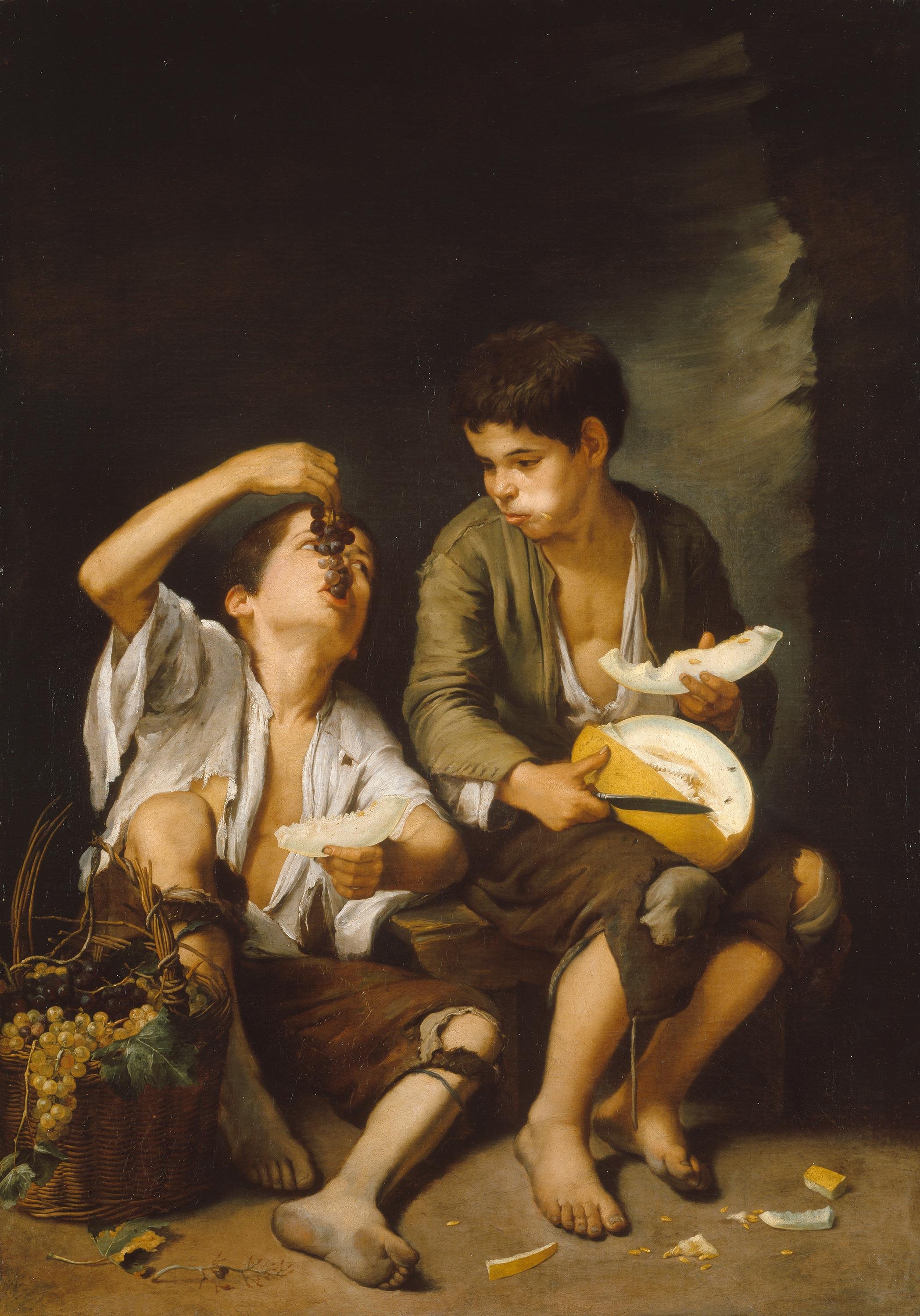
Figure 2. Bartolomé Esteban Murillo, The Grape and Melon Eaters, 1645. Oil on canvas, 145.9 x 103.6 cm. Alte Pinakothek, Munich, Germany.
Dignifying the Destitute
Thus, Murillo’s repeated representations of poor children in secular settings emerged in concurrence with improving attitudes towards the destitute, and his unprecedented portrayal of these subjects unveils such developments and his personal morality. Without airs of satirizing condescension, Murillo depicted his poor, lower-class subjects with a sense of dignified sanctity.
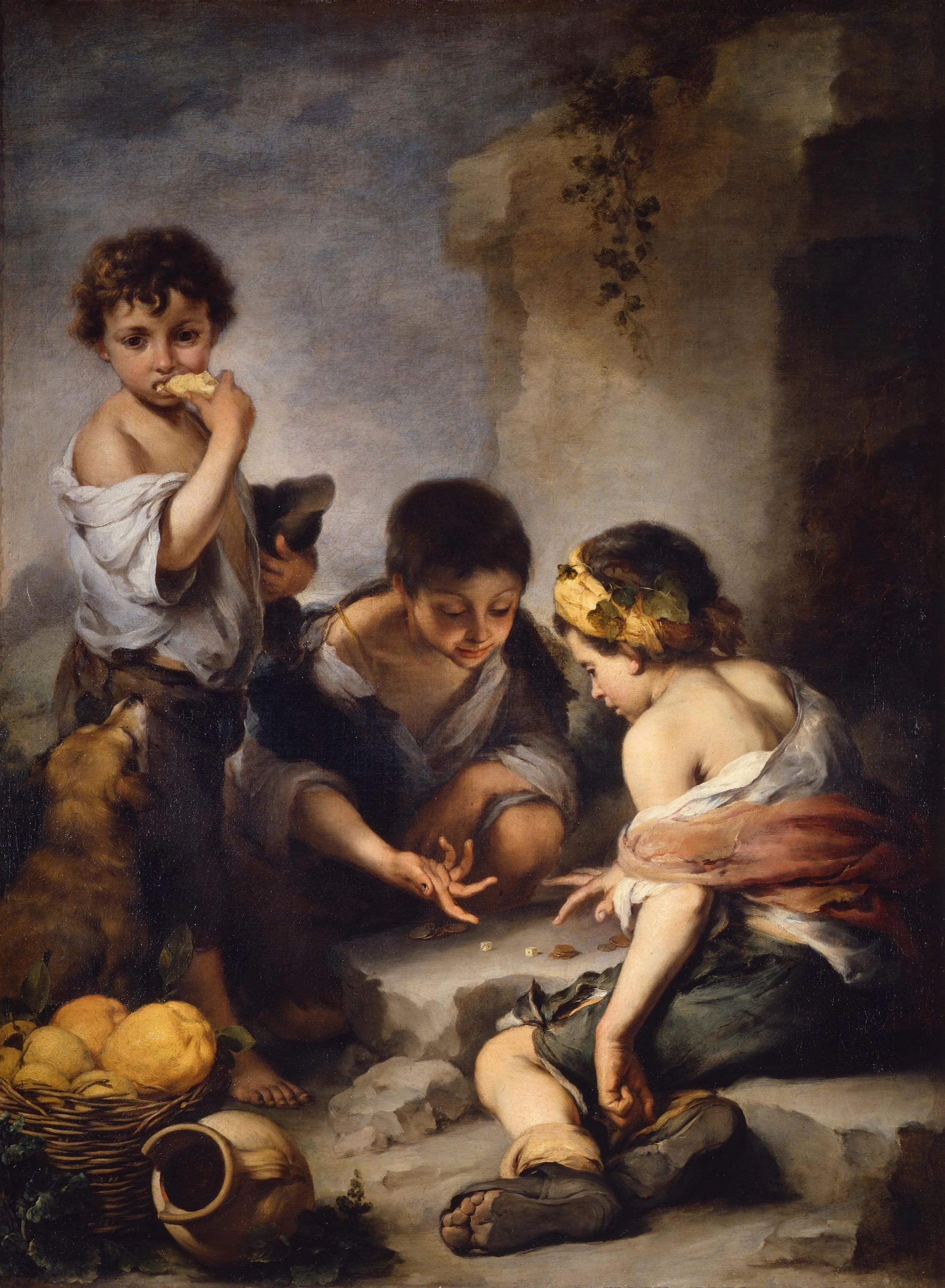
Figure 3. Bartolomé Esteban Murillo, Three Boys Playing Dice, 1675-80. Oil on canvas, 146 x 108.5 cm. Alte Pinakothek, Munich, Germany.
Despite the seemingly-desolate scenery, Murillo’s compositions transform the simple images of impoverished children through his dramatic manipulation of light. In the Grape and Melon Eaters (Fig. 2), from the intensely-darkened background, Murillo shines an impossible light solely upon the young boys; the chiaroscuro technique elevates the boys from the decaying landscape and enshrouds them in an impossible, almost divine, light that prevails in his compositions of religious figures. Their youthful, plump cheeks, full from their delectable feast of tantalizing fruits, unveil none of the despair and deprivation of poverty, but rather exude an almost heavenly glow that removes these figures from their pitiful settings. This ethereal light permeates across all five works within the Munich collection, illuminating the children from the background and imbuing their beings with a divine quality. Moreover, Murillo utilized the physical scale of his compositions to highlight the figures’ dignified presence. Uncharacteristic of the “lowly” genre, often relegated to small-scale canvases, Murillo’s compositions of common subjects are life-sized, instilling life within his figures and aggrandizing their status from that of genre scenes to one of portraiture or even the higher genres. By portraying the children as life-sized, Murillo illusionistically imbues them with presence, for he “dissolves the border of the real space occupied by the viewers and the fictive space of the painting.”[22] The young boy on the left of the Three Boys Playing Dice (Fig. 3), for example, stands assuredly and gazes intensely out of the picture, demanding the utmost attention and reciprocal eye contact from the audience. Despite the boy’s youthful countenance and plain poverty, the potent illusion Murillo evokes from portraying the children as life-sized and with marvelous naturalism produces a moving effect. The serene, illusionistic presence and uninterrupted interaction with the audience confer upon the child a stately air seldom present in genre compositions.
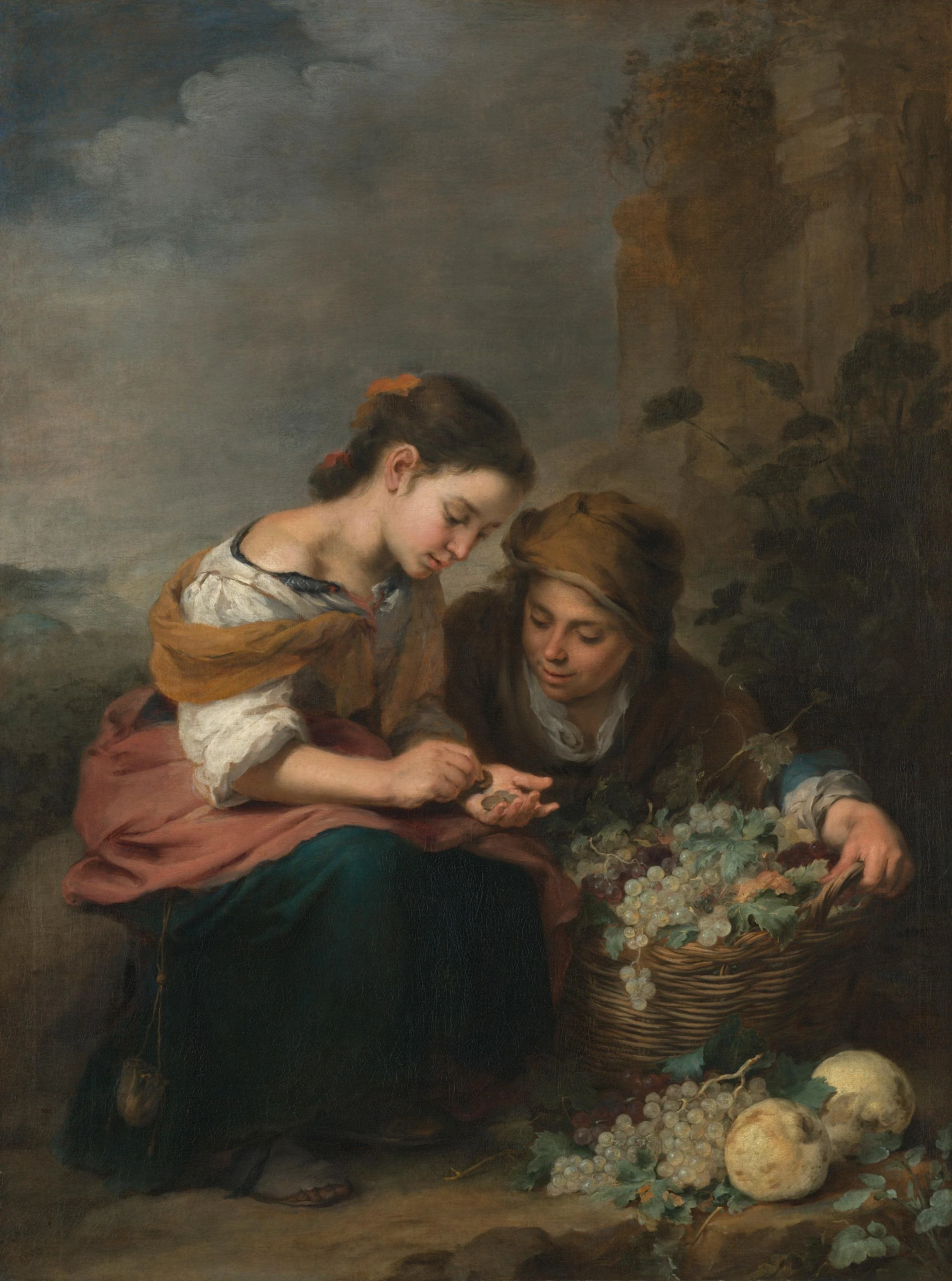
Figure 4. Bartolomé Esteban Murillo, Young Fruit Sellers, 1670-75. Oil on canvas, 144.3 x 107.6 cm. Alte Pinakothek, Munich, Germany.
While the paintings’ protagonists are unmistakably poor in monetary wealth, as evidenced by their tattered clothing and desolate environs, they are never lacking in serene composure nor decorum. By portraying his figures in moments of earnest work or complacent relaxation, Murillo refrained from depicting explicitly-veristic realities of poverty and from demeaning the poor. In the Young Fruit Sellers (Fig. 4), Murillo portrays a pair of children dressed in plain, simple draperies and seated on the ruinous architectural remains in the bleak landscape. Yet, despite their modest appearance and evidently-meager earnings, Murillo captured the children in a moment of tranquil respite, with the evidence of their diligent labor visible in the foreground. The vivid, delectable fruits, much too luxurious in contrast to their unornamented clothing, emphasize their poverty, while the rest of composition foregrounds their hardworking virtues, as they perform their tasks competently even at their young age to improve their living. The girl’s fingertips, still plump and uncalloused, meticulously sort through the coins, while the boy leans over in sincere attention. Rather than depicting these children as impoverished beggars or defiant picaros, Murillo’s children are hardworking, self-contained, and dignified. By portraying his poor subjects in these moments of earnest labor, Murillo further emphasizes the virtues of hard work and humility central to the sanctus pauper.
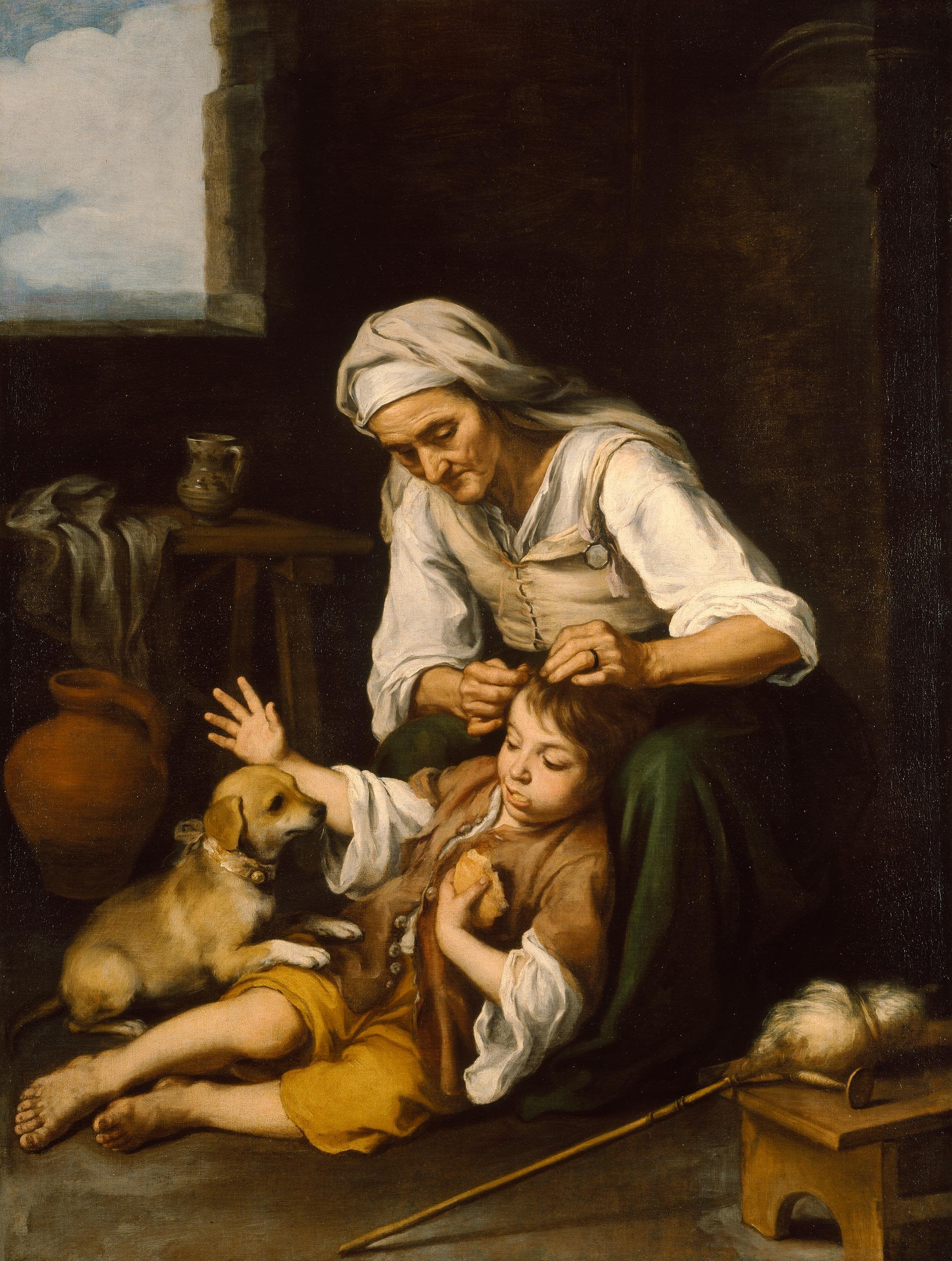
Figure 5. Bartolomé Esteban Murillo, Old Woman Delousing a Boy, 1655-60. Oil on canvas, 143.7 x 109 cm. Alte Pinakothek, Munich, Germany.
The same sanctification of his poor, secular subjects appears in his Old Woman Delousing a Boy (Fig. 5). In one of his only genre paintings that depicts an adult figure, Murillo subtly manipulates his composition to elevate the status of the deserving poor by translating his religious compositions into secular subjects. Though this composition appears most closely-related to those of the Northern European tradition, such as the works of Pieter de Hooch and Gerard ter Borch the Younger, Murillo’s reimagination of the scene sought to once again elevate the subjects from the secular world of genre scenes to one of divinity.[23] In Murillo’s composition, the old woman and child occupy the center of the scene in full length, staging a triangular formation. The woman, her head bent in earnest concentration, forms the peak of the triangle, with her arm, clad in a neat white shirt, outstretched to form the sides. The reclining young boy, in utter relaxation and pleasure, extends his leg towards the left of the painting, accentuating the sides of the triangular form. The intentional positioning of the figures delineates a deliberate reference to the triangular compositions traditionally employed in religious scenes, such as the Virgin and Child tropes and Murillo’s own Saint Anne teaching the Virgin to Read (Fig. 6), painted during the same period. The visual connection between the secular and sacred compositions bridges the two realms while aggrandizing the poor subjects into the dignified roles of the holy figures. In religious compositions, the triangular structure often depicts the holy family, a theme which typifies ideal familial roles; in particular, two figures frequently featured in such compositions were the Virgin and St. Anne, both of whom served as model parents.[24] Translating these religious associations and symbols, Murillo presents the attentive woman, who performs the virtuous deeds of the ideal Christian woman, as an echo of the divine mothers.[25] With the prevalent crises of abandoned and orphaned children, Sevillian women were instructed to act in accordance with scriptures to take care of the children.[26] By transforming the religious composition into one rooted in the secular world, Murillo positions the poor woman as a model “mother,” highlighting her virtuous nature and reinforcing the ideals of the sanctus pauper.
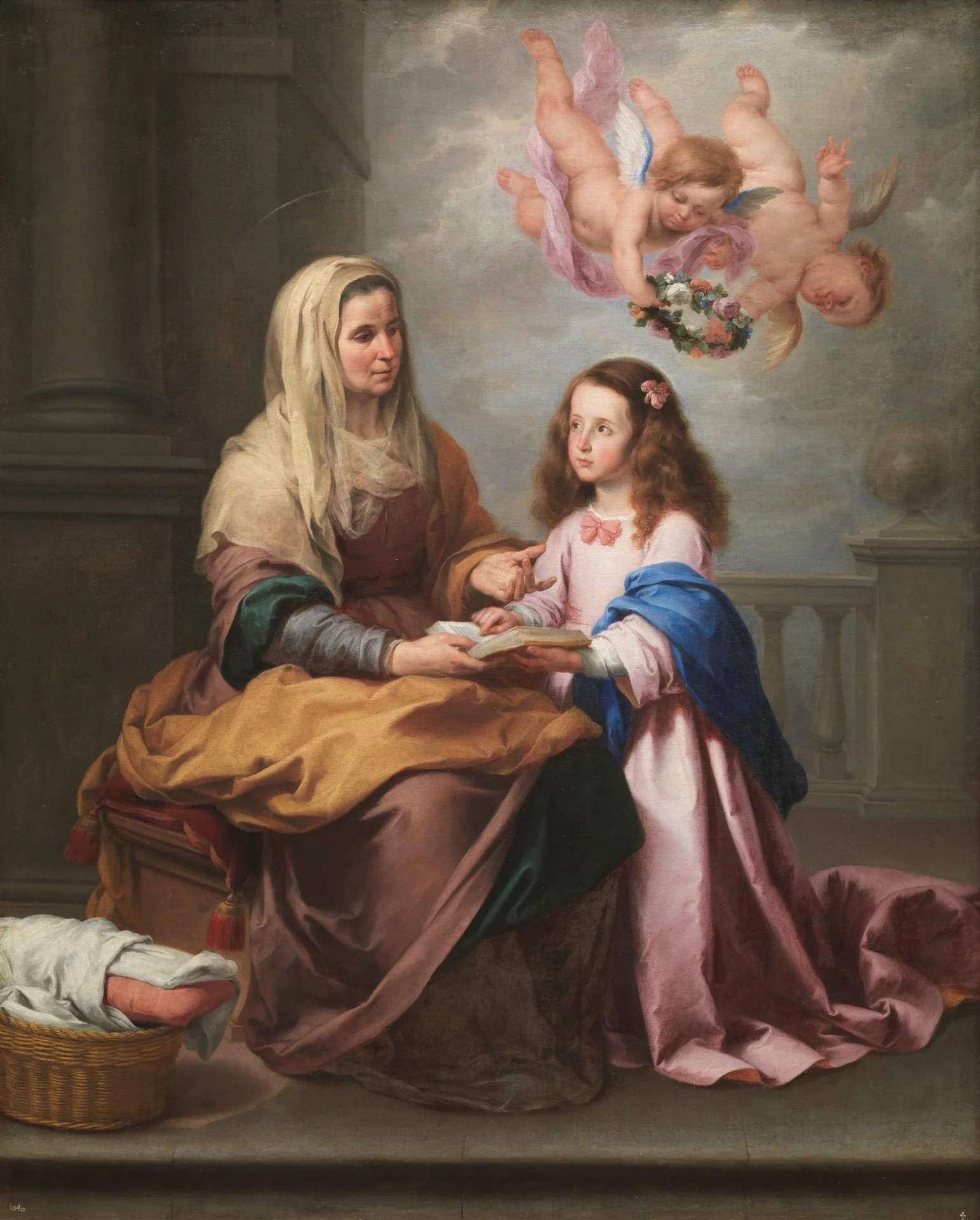
Figure 6. Bartolomé Esteban Murillo, Saint Anne teaching the Virgin to read, 1655. Oil on canvas, 219 x 165 cm. Museo del Prado, Madrid, Spain.
Motif of Childhood
Moreover, beyond his idealizing portrayal, Murillo’s focus on the motif of children further serves to sanctify the poor. While the precedences in the genre, in both Northern and Spanish traditions, feature and frequently center upon adult figures, Murillo directed his attention to poor children, unaccompanied by adults, for the vast majority of his secular scenes. By engaging with the Christian ideology of holy childhood and the pictorial representations in religious compositions, Murillo’s motif of childhood enhances his sanctification of the poor and glorifies them as the ideal Christians.
The motif of children possessed a symbolic value as the paradigm of holiness and of the model Christian. As previously posited, Murillo’s paintings of children existed not as mere replications of reality, but as meticulous constructions that sought to elevate the poor to sanctification. Since early Christianity, the metaphor of children was ubiquitous in scriptures, conceptualizing the holy connection between God and his followers, with Christ presented as the “son” of God and Christ’s devotees as “little children.”[27] Children thus served as a metonymic paragon of pious followers of God. Moreover, throughout the Gospels, Christ framed the period of childhood as one of perfect purity. In the Book of Matthew, Jesus sanctified young children by ordering his disciples to “let the little children come to me, and [to] not hinder them, for the kingdom of heaven belongs to such as these.”[28] This early stage of life was seen as one of faultless purity, as Christ called upon his disciples that “unless you change and become like little children, you will never enter the kingdom of heaven.”[29] Children were not only recipients of aid and charity, but the manifestation of ideal holiness and “spiritual models.”[30] In visual representations, children possessed the same esteemed position as the model divine, as they were first depicted primarily as angels; the Infant Jesus; and naked babes, a metaphorical embodiment of the soul in the thirteenth century.[31] A secular iconographic representation of children materialized in the fifteenth and sixteenth centuries, before fully emerging as a prevalent trope in the seventeenth century.[32] Yet, even in these secular depictions of children, the images still “gave the child a place of honor,” as the artists transformed conventional religious compositions into secular contexts, such as in scenes of St. Anne teaches the Virgin to read.[33] Thus, even in secular compositions, the depiction of children maintained their inherent connection to the sacred, embodying the spirit of the religious image and assuming its divinity.
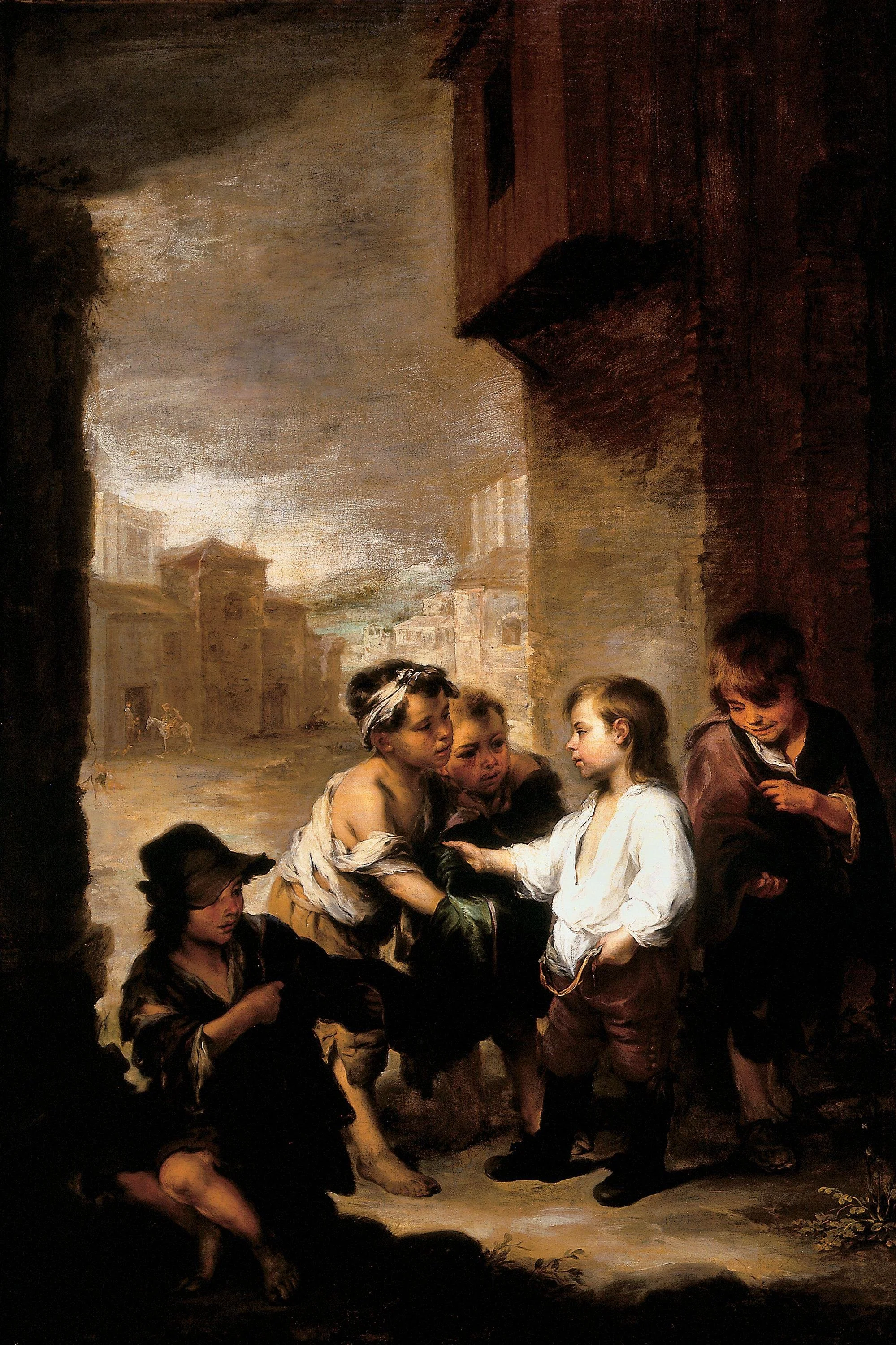
Figure 7. Bartolomé Esteban Murillo, Saint Thomas of Villanueva Dividing His Clothes Among Beggar Boys, 1667. Oil on canvas, 219.7 x 149.2 cm. Cincinnati Art Museum, Cincinnati, Ohio.
The intrinsic holiness of children was likewise evident in Murillo’s artistic productions through the employment of parallel tropes in both religious and genre scenes, conflating his visual vocabulary between the sacred and secular in unprecedented manners. One of the most eloquent representations of the divine nature of childhood in religious compositions was his 1667 Saint Thomas of Villanueva Dividing His Clothes Among Beggar Boys (Fig. 7). Commissioned for the Church of Augustín, Murillo created a cycle of religious narrative paintings recounting the life and venerable deeds of the saint. Visual representations of St. Thomas, a benevolent proponent of charity known as the “father of the poor,” often portray him performing acts of almsgiving. Yet, in Murillo’s interpretation of the saint’s life, Murillo portrays St. Thomas not in his venerable, pious state, but as a youthful child in a scene of desolate ruins, surrounded by poor children. Murillo’s unusual portrayal of the saint in the stage of childhood underscores children’s inherent holy nature and the profound metaphorical significance of the iconography on the artist.[34] Conflating the states of saintly purity and childhood, Murillo establishes the sacred significance of children within his oeuvre. The unidealized nature of the scene, with its desolate architecture and undone clothing, intimately recalls his paintings of childhood, for he blended the visual vocabulary between his religious and secular scenes. Though the figure of young St. Thomas appears more idealized, with his luscious blond locks and his pristine white shirt, both the children of Murillo’s secular works and his depiction of St. Thomas command themselves with the same dignified composure and exist under the impossible, divine glow. The portrayal of St. Thomas, removed from the context of the cycle and the religious setting in which it resided, is little different from that of the secular boys. The boundary between secular and sacred is therefore blurred through the iconography of divine childhood. Further compositional parallels can be found between The Pie Eaters (Fig. 1) and St. John the Baptist with a Lamb (Fig. 8), another saint whom Murillo portrays in child-form multiple times throughout his career. In both images, Murillo depicts a radiant child seated on bleak ruins in a nondescript landscape. Their glowing faces, modelled with Murillo’s distinct softness and gentle contours, glances up towards the sky, their plump lips slightly agape. By their side, accompanying pets, an eager dog and an attentive lamb respectively, lift their heads towards the boys, the angles of their necks and their positioning in precise parallel. Murillo conceives of his secular and sacred images within the same visual vocabulary, imbuing his genre images with the divine language through the shared subjects. Through the seamless translation between his pictorial languages, Murillo utilizes the motif of childhood to sanctify his secular subjects, reminding the viewers of the divine when encountering these children.
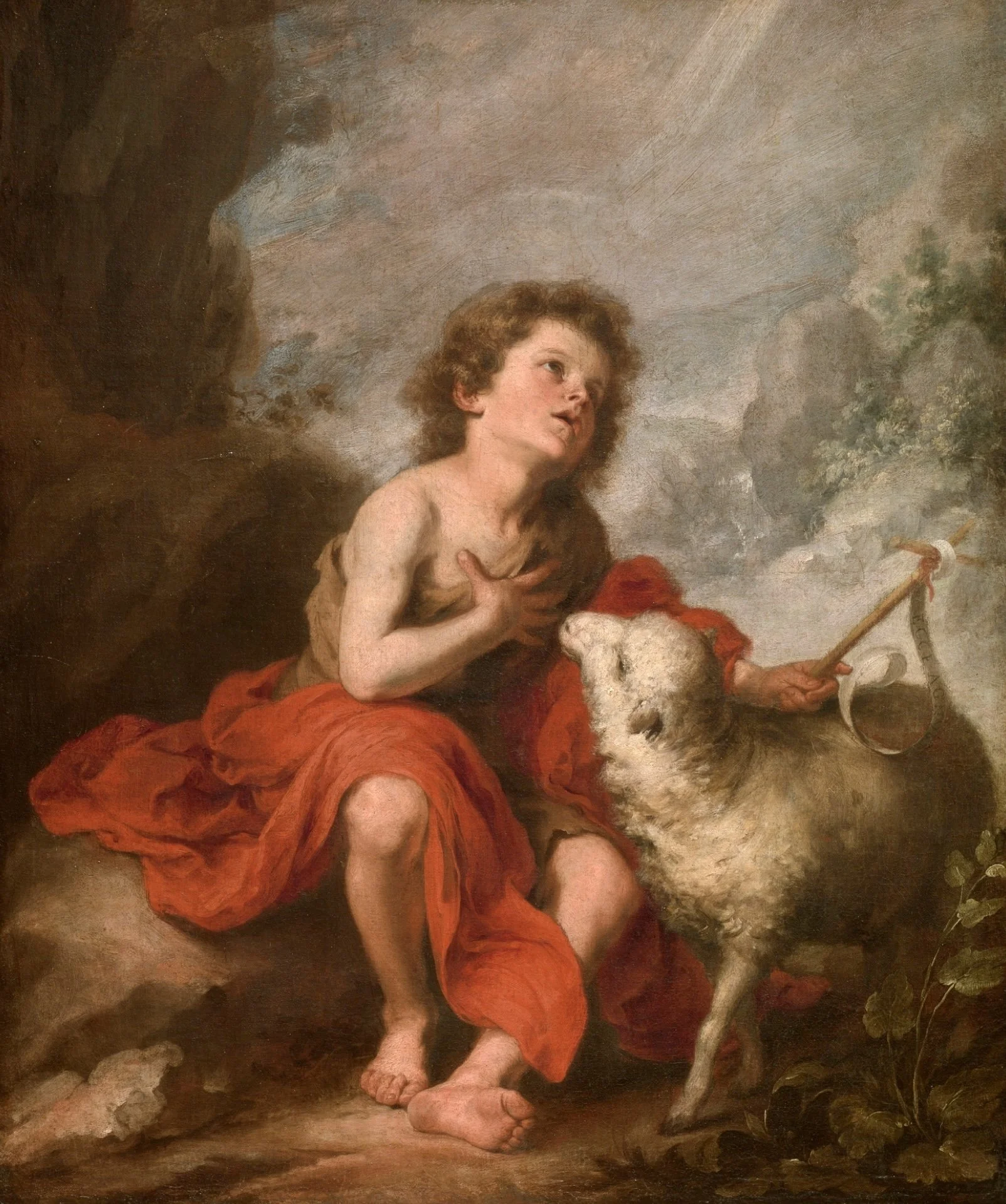
Figure 8. Bartolomé Esteban Murillo, The Infant Saint John the Baptist, 1670. Oil on canvas, 121 x 99 cm. Museo del Prado, Madrid, Spain.
Hence, Murillo’s consistent depiction of children not only arises from the historical context of seventeenth-century Seville, but also converges the theological view of children as divine and the pictorial development of the childhood trope to bridge the distance between the sacred and the secular. As Peter Cherry posits in Scenes of Childhood, Murillo’s children could be seen as “twice blessed,” by both the immanence of Christ in their poverty and their divinity as the “innocents chosen by God.”[35] The innately divine children within these secular settings, depicted in the same visual vocabulary and compositions as his religious works, emerge as transforms his works into a realm of the in-between and a novel genre: a secularized depiction of the sacred.
The Economy of Charity
Thus, Murillo’s images of childhood appear particularly pertinent to the culture of charity in seventeenth-century Seville, aligning with the positive attitudes towards the poor; yet, the relative lack of popularity of these works in Spain emerge as a perplexing paradox. None of these paintings remained in Spain until the modern period, with a grand majority exported to Northern Europe and beyond by the last decade of the eighteenth century, underlining contemporary Sevillian patrons’ general hesitation towards these images.[36] During Murillo’s lifetime, his secular paintings were largely unpopular among his native Sevillian clientele. When Nicolás Omazur arrived in Seville in July 1669, he was able to purchase an impressive amount of his genre paintings dated to the 1650s, suggesting that the paintings remained in Murillo’s possession without much demand for almost two decades.[37]The Spanish court was similarly reluctant to appreciate Murillo’s secular works, acquiring first only his religious compositions. Antonio Palomino’s extensive biography on the artist and his artists outputs failed to mention any of his secular scenes, and only under Joachim von Sandrart, a German artist and theorist from Amsterdam, were these images favorably mentioned. Indeed, Murillo’s secular paintings did not speak to his Sevillian clientele, or even the broader Spanish market, for almost all of such images departed the city at early dates after their production and were acquired by patrons with Northern ties, such as Josua van Belle, Justino de Neve, and Nicólas Omazur.[38] The Alte Pinakothek collection in Munich reflects this puzzling contradiction. The collection, acquired by the Electors of Munich over the course of the eighteenth century, originated in 1692 with Elector Maximillian II Emmanuel’s acquisitions of Grape and Melon Eaters and Three Boys Playing Dice, only a decade after the artist’s death.[39] The following acquisitions of The Young Fruitsellers and Old Woman Delousing a Boy in 1768 and Two Boys Eating a Tart in 1799 likewise came from Northern collectors.[40] Thus, the paintings presently at the Alte Pinakothek underline the popularity of Murillo’s works in the North, in contrast to their lack of popularity in Spain.[41] Given the gracious tolerance for the poor and the prevalence of charity, the continued distaste for these subjects appears paradoxical. The reception of these paintings, such as the five works in the Alte Pinakothek collection, thereby presents an intriguing perspective into the realities of Sevillian patronage.
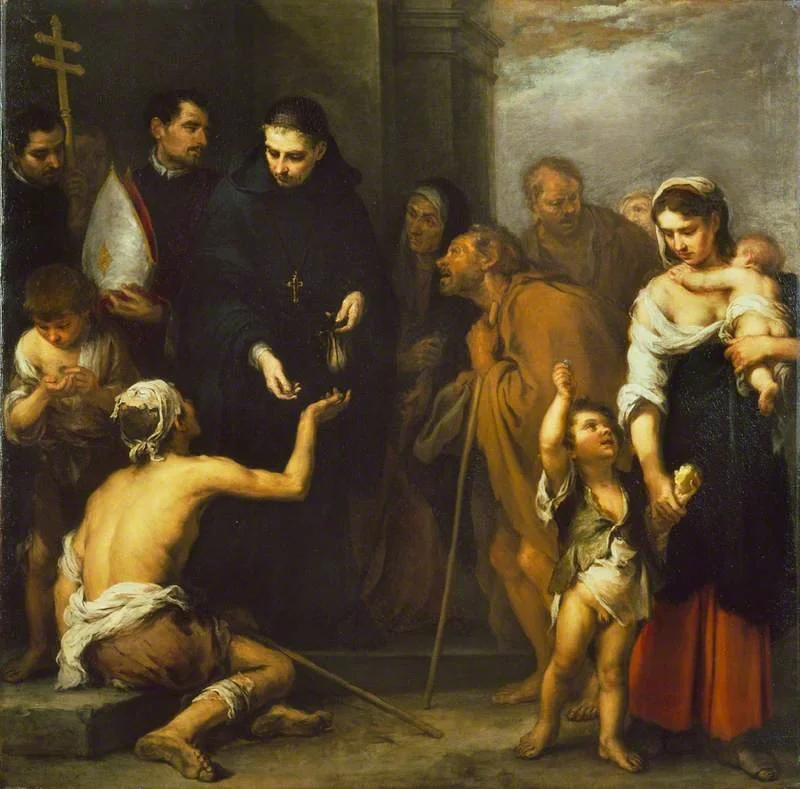
Figure 9. Bartolomé Esteban Murillo, The Charity of Saint Thomas of Villanueva, 1665–70. Oil on canvas, 150.2 x 152.6 cm. The Wallace Collection, London, England.
Though charity towards the poor rose to prominence in seventeenth-century Seville, as the wealthy elites dedicated themselves to performing acts of charity and making monetary contributions to assist the poor, there were more self-serving incentives beyond pure benevolence. The gracious acts of charity were incentivized by a symbiotic relationship between the wealthy and poor of Seville; while the poor ought to embody the virtuous humility of Christ in their poverty, the affluent must exercise their virtues of generosity and charity to achieve their own salvation after death.[42] Catholic doctrine allowed for one to be redeemed for their sins through the performance of charitable work and penance.[43] According to an anonymous Sevillian cleric, “charity was established not so much for the poor as for the rich” and that “God, in his infinite wisdom, had created the poor so that the rich could win salvation.”[44] Poverty thus became an opportune occasion for the wealthy to manifest their moral virtuosity and ensure their salvation. Scriptures spoke directly to the affluent, mandating the privileged to “defend the weak and the fatherless, uphold the cause of the poor and oppressed, rescue the weak and the needy,” and that the ignorant failure or malevolent treatment of those in need “will not go unpunished,” prompting active acts of charity and benignity.[45] Christian love, or charity, became a contentious, morally-fraught entanglement of societal duties, genuine compassion, and self-serving desires for salvation. Critics condemned the Catholic ideology of poverty and charity as “sentimental, haphazard, and self-regarding.”[46] As Swiss Reformation theologian Ulrich Zwingli criticized, Catholic charity was not exercised out of benevolence and honoring of God, but out of fear of the devil and of hell or of God as a tyrant, or in order to purchase time or eternity.”[47] Indeed, the paintings featuring poverty commissioned and favored by Murillo’s Sevillian patrons, such as The Charity of Saint Thomas of Villanueva (Fig. 9) and Saint Elizabeth of Hungary Curing the Sick (Fig. 10), center upon and glorify the act of charity, rather than the figures in need. Thus, under such a convoluted economy of charity, it was likely that despite the prevalence of the conceptual ideals of the sanctus pauper and the public displays of charity, Murillo’s emphasis on the poor subjects did not resonate with his Sevillian patrons. The collection at the Alte Pinakothek thereby highlights the images’ lack of appeal to their Sevillian audience and unveils the complexities of seventeenth-century Sevillian culture.
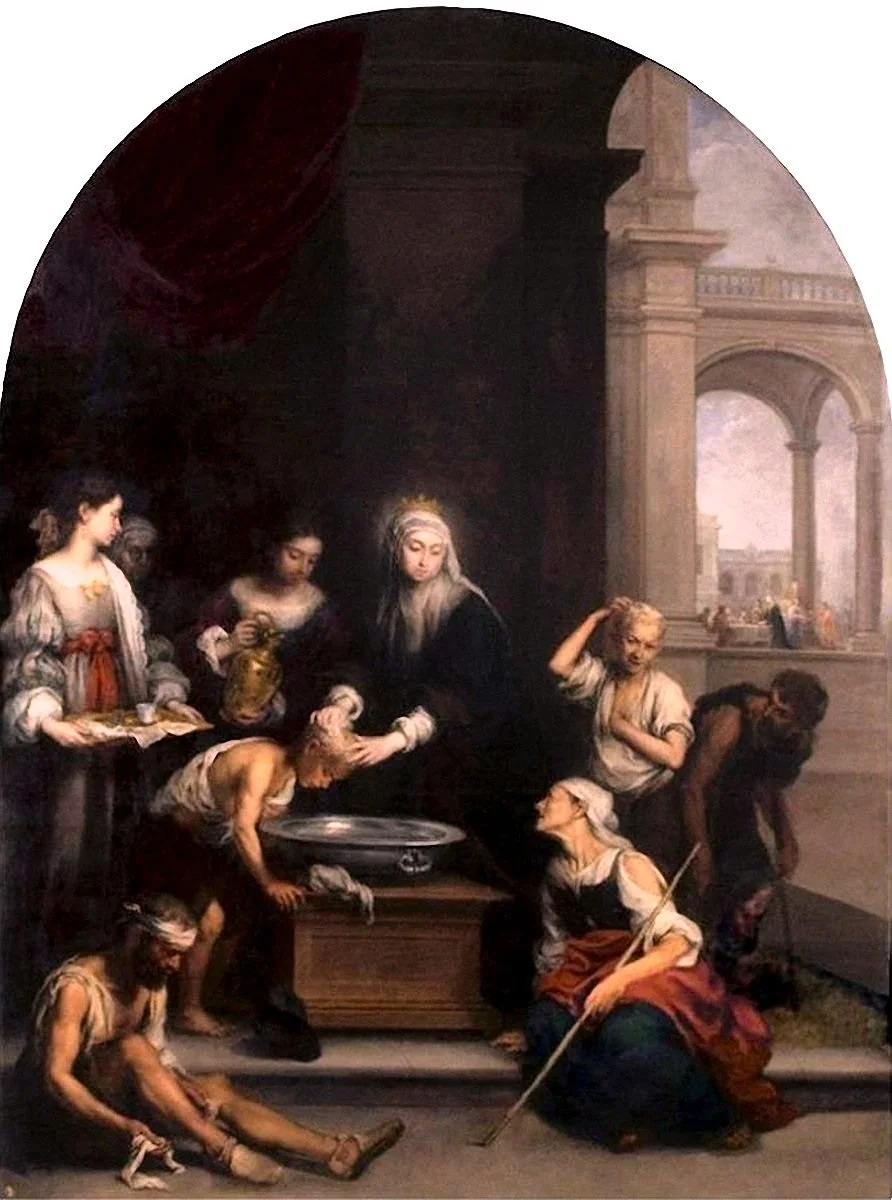
Figure 10. Bartolomé Esteban Murillo, Saint Elizabeth of Hungary Curing the Sick, 1672. Oil on canvas, 325 × 245 cm. Church of the Santa Caridad, Seville, Spain
Conclusion
Murillo’s paintings of children create a liminal space between the secular and sacred. Even though the children physically exist within a secular, genre-like setting, Murillo eloquently engaged the contemporary Catholic Sevillian culture of charity and his personal morality to elevate the status of these children into a realm of the divine. Transforming the Northern types of genre composition, Murillo granted his figures a sense of self-possessed dignity despite their poverty, presenting them with a sense of poised humility that emphasized the ideology of the sanctus pauper. By focusing on young children as his subjects, Murillo engages the ideologies of the holy children as the model Christian, conflating his visual languages between religious and secular compositions. Murillo, through his visual and ideological conflation of the secular and divine, created these images within an entirely novel framework that sought to bridge the chasm between the religious and genre compositions, but more importantly between the sacred and profane. Under the ephemeral softness of Murillo’s brushstrokes, these children are not merely destitute orphans, abandoned amidst the unforgiving catastrophes of Seville, but the purest embodiment of the sanctus pauper: the holy child of God, a form of secular made sacred. The ultimate disfavoring of these images within Seville, as evidenced through the Alte Pinakothek collection, further reveals the paradoxes within the economy of charity. Through Murillo’s seemingly simple images of children, the complex world of seventeenth-century Seville is unveiled, with its tragedies, acts of benevolence, and moral tensions.
Endnotes
[1] Xanthe Brooke, “Seville and Beyond: The Taste for Murillo’s Genre Painting across Europe,” in Murillo: Scenes of Childhood, ed. Xanthe Brooke and Peter Cherry (London: Merrell, 2001), 57-60.
[2] Peter Cherry, “Murillo’s Genre Scenes and Their Context,” in Murillo: Scenes of Childhood, ed. Xanthe Brooke and Peter Cherry (London: Merrell, 2001), 14.
[3] Cherry, “Murillo’s Genre Scenes and Their Context,” 29.
[4] Ibid, 9.
[5] Amanda Wunder, “Introduction,” in Baroque Seville: Sacred Art in a Century of Crisis, (University Park, PA: The Pennsylvania State University Press, 2017), 10.
[6] Jonathan Brown, “The Art of Immediacy: Seville,” in Painting in Spain, 1500-1700, (New Haven: Yale University Press, 1998), 200.
[7] Ibid.
[8] David R. Ringrose, Spain, Europe, and the “Spanish Miracle,” 1700–1900 (Cambridge: Cambridge University Press, 1996), 88.
[9] Claude Larquié, “Popular uprisings in Spain in the mid‐seventeenth century,” Renaissance and modern studies 26, no. 1 (1982): 90-107; Domínguez Ortiz, Antonio, Historia de Sevilla. La Sevilla del siglo XVII (Sevilla: Editorial Universidad de Sevilla: 1986), 77.
[10] Cherry, “Murillo’s Genre Scenes and Their Context,” 9.
[11] Mary Elisabeth Perry, “Beggars and Benefactors,” in Crime and Society in Early Modern Seville (Lebanon, New Hampshire: University Press of New England, 1980), 166.
[12] AMS, Siglo XVI, Sección 3, Escribanías de Cabildo, Tomo 12, No. 6.
[13] Arsenio Moreno Mendoza, “Murillo y el ideal del sanctus pauper,” Revista de Historia del Arte 25 (2019), 9.
[14] Mendoza, “Murillo y el ideal del sanctus pauper,” 20.
[15] 2 Corinthians 8:9.
[16] Luke 6:20-21.
[17] Amanda Wunder, “The Nobility of Charity: The Church and Hospital of the Santa Caridad,” in Baroque Seville: Sacred Art in a Century of Crisis, (University Park, PA: The Pennsylvania State University Press, 2017), 97.
[18] Anne Mairi Macdonald, “Mediating otherness : discourses and images of poverty in the paintings of Bartolomé Esteban Murillo (1617-1682)” (doctoral thesis, University of London, 2018), 30.
[19] Cherry, “Murillo’s Genre Scenes and Their Context,” 37.
[20] Alexander Samson, “Between the Picaresque and the Picturesque: Bartolomé Esteban Murillo (1617–1682) Visualising Spain in an Age of Decline?” in Philip IV and the World of Spain’s Rey Planeta, ed. by Stephen M. Hart and Alexander Samson (Martlesham: Boydell & Brewer, 2023), 266.
[21] Antonio Palomino de Castro y Velasco, Lives of the eminent Spanish painters and sculptors, trans. Nina Ayala Mallory (Cambridge: Cambridge University Press, 1987), 283.
[22] Cherry, “Murillo’s Genre Scenes and Their Context,” 22-25.
[23] Xanthe Brooke and Peter Cherry, “Old Woman Delousing a Boy, c. 1655-60” in Murillo: Scenes of Childhood, ed. Xanthe Brooke and Peter Cherry (London: Merrell, 2001), 106.
[24] Charlene Villaseñor Black, Creating the Cult of St. Joseph: Art and Gender in the Spanish Empire (Princeton, New Jersey: Princeton University Press, 2006), 68
[25] Black, Creating the Cult of St. Joseph, 68
[26] Guillaume Kientz, “Youth and Age,” in Murillo: From Heaven to Earth, ed. Guillaume Kientz (Fort Worth: Kimbell Art Museum, 2022), 84.
[27] Cornelia B. Horn and John W. Martens, “Let the Little Children Come to Me”: Childhood and Children in Early Christianity (Washington D.C.: Catholic University of America Press, 2009), 41.
[28] Matthew 19:13-14.
[29] Matthew 18:1-3, NIV.
[30] Horn and Martens, “Let the Little Children Come to Me,” 56
[31] Philippe Ariès, Centuries of Childhood: A Social History of Family Life, trans. by Robert Baldick (New York: Knopf Doubleday Publishing Group, 1965), 34-36.
[32] Ariès, Centuries of Childhood, 37, 46.
[33] Ariès, Centuries of Childhood, 37, 47.
[34] After both independent research and discussion with Professor Pereda, I have yet to come across any depictions of saints in child form, with exceptions of Christ, the Virgin, and St. John the Baptist.
[35] Cherry, “Murillo’s “Murillo’s Genre Scenes and Their Context,” 41.
[36] Brooke, “Seville and Beyond,” 51, 66.
[37] Brooke, “Seville and Beyond,” 54.
[38] Samson, “Between the Picaresque and the Picturesque,” 272.
[39] Brooke, “Seville and Beyond,” 58.
[40] Ibid.
[41] It is certainly important to keep in mind that Murillo evidently produced these images with the intentions of export to a Northern market, especially given the greater popularity of the genre in the Northern regions and the connections of his patrons; therefore, it is not surprising that these images were highly sought-after in the North. The question remains on its lack of popularity in Spain.
[42] Cherry, “Murillo’s “Murillo’s Genre Scenes and Their Context,” 39.
[43] Kientz, “Murillo’s Moral Compass,” 5.
[44] Wunder, “The Nobility of Charity,” 99.
[45] Psalm 82:3-4; Proverbs 17:5.
[46] Brian Pullan, “Catholics, Protestants, and the Poor in Early Modern Europe,” The Journal of Interdisciplinary History 35, no. 3 (2005), 446.
[47] Pullan, “Catholics, Protestants, and the Poor in Early Modern Europe,” 466.